Meta VR Glasses 100 Grams: Can a Lightweight Headset Replace Your Monitor
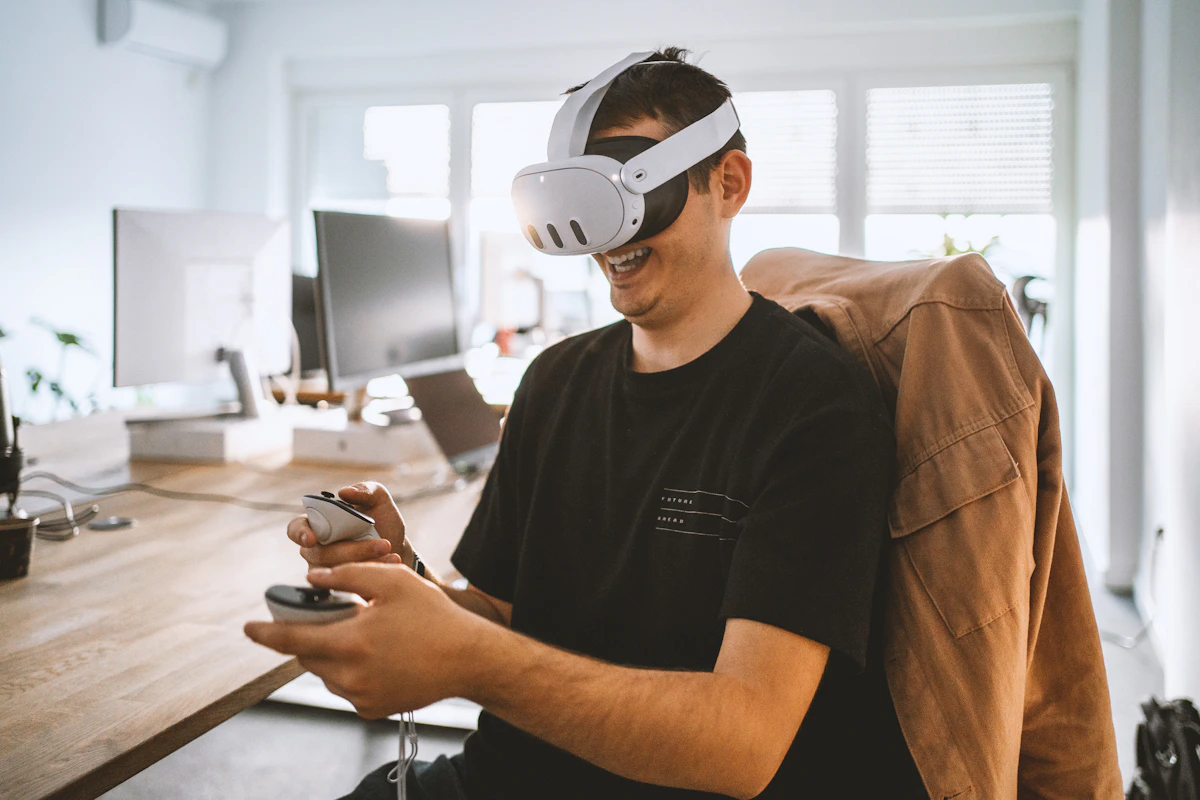
A headset weighing less than a can of soda is about to compete with your $800 ultrawide monitor. That’s the bet Meta’s making with its new VR glasses — and the specs suggest it’s not as far-fetched as it sounds.
The monitor replacement pitch has been circulating in VR circles since 2021. Every headset that came before either weighed too much, ran too hot, or delivered resolution too blurry for sustained productivity work. At 100 grams with micro-OLED displays hitting 37 pixels per degree, this is the first time the hardware actually matches the ambition.
But weight is just one variable. The real question is whether the full package — display quality, battery life, tether constraints, software ecosystem — adds up to a credible monitor replacement in 2026, or whether this stays a premium entertainment device with a productivity marketing angle.
Key Takeaways
- Meta’s VR glasses reach ~100 grams by offloading compute to a separate “Puck” device — five times lighter than Meta Quest 3.
- At 37 PPD, the micro-OLED display surpasses Apple Vision Pro (34 PPD) and significantly outpaces Quest 3 (25 PPD), clearing the minimum threshold for comfortable text reading.
- Priced at $1,299, the device undercuts Apple Vision Pro ($3,500) and Samsung Galaxy XR ($1,800), targeting a more accessible professional segment.
- The three-hour battery limit and controller-free input model create real workflow friction that buyers need to weigh against the display upgrade.
- Reality Labs has lost approximately $83.6 billion over six years — Meta needs this product to convert beyond enthusiast buyers to survive the unit economics.
Why Monitor Replacement Is a Harder Problem Than It Looks
The VR productivity pitch keeps returning because the upside is real. A headset that renders infinite virtual screens would let remote workers skip the desk setup entirely — relevant when IDC estimates over 60% of knowledge workers now operate in hybrid or fully remote arrangements.
The obstacle has always been the same hardware trifecta: weight, resolution, and battery. Quest 3 at 515 grams causes neck fatigue within 90 minutes for most users. Apple Vision Pro at 600–650 grams addressed resolution (34 PPD) but not weight, and its $3,500 price point limited adoption to a narrow professional segment. Samsung’s Galaxy XR arrived at $1,059–$1,200 with a conventional form factor but didn’t move the weight needle meaningfully.
Meta’s approach is structurally different. Rather than stuffing compute into the visor, the Puck offloads the Snapdragon Reality Elite chipset, battery, and storage to a pocket-clipped unit connected via optical tether. The visor housing contains only displays, lenses, and sensors. That’s the design decision that gets the weight to ~100 grams.
The trade-off is the tether. Wireless freedom disappears. The Puck needs to live on your body — pocket, bag strap, belt clip. For seated desk work, that’s a minor annoyance. For walking around a warehouse or taking calls while moving, it’s a genuine constraint.
The Display Case: 37 PPD Actually Changes the Math
Resolution is where previous VR headsets failed the monitor replacement test most visibly. Text at Quest 3’s 25 PPD reads like a compressed JPEG. Sustained reading sessions produce eye strain fast.
At 37 PPD with micro-OLED panels, the Meta VR glasses exceed Apple Vision Pro’s 34 PPD — a device that most reviewers considered the first VR display genuinely comfortable for document work. Micro-OLED also delivers true blacks and higher contrast ratios than LCD-based alternatives, which matters when you’re reading code or dark-mode interfaces for hours.
Dolby Vision support and IMAX Enhanced certification target the entertainment use case. But for productivity, what matters is that the display baseline finally clears the minimum bar. That’s a first for a non-$3,500 device.
The Weight Question: 100 Grams in Practice
Five times lighter than Quest 3 sounds dramatic. In practice, 100 grams sits in the range of heavy sunglasses or a light cycling helmet. Eyeglasses average 20–30 grams, so these are still 3–4x heavier than glasses — but they’re closer to wearable normalcy than any previous VR headset has managed.
Weight distribution matters too. According to PC Guide, the visor ships without a strap — navigation runs through hand tracking and gaze control. That removes counterweight options but suggests the weight sits forward-balanced enough that Meta believes straps are unnecessary for typical sessions.
Three hours of battery is the honest ceiling. That covers a focused work sprint or a full movie. An eight-hour workday requires either the Puck connecting to USB-C power or cycling batteries. Not a dealbreaker — laptop workers already manage this — but it means planning ahead.
Input Without Controllers: Productivity Risk or Feature?
Hand tracking and gaze control as the primary input model is the boldest call here. No bundled controllers positions this as a media and workspace tool, not a gaming peripheral — even though Touch Plus controllers remain compatible as an add-on.
For productivity, gaze-plus-gesture control has one genuine advantage: no desk space required. No mouse, no keyboard shadow, cleaner physical workspace. But precision work — spreadsheets, code selection, pixel-level design — currently struggles with the gesture input latency and accuracy that controller-based systems handle better.
Voice control via AI assistance covers some of that gap. Whether it covers enough depends on your specific workflow. Developers writing code need keyboard input regardless. Writers already using dictation tools could adapt faster.
This approach can fail when workflows require sustained precision — dragging columns in Excel, selecting specific text ranges, navigating complex UI trees. In those scenarios, the controller add-on becomes effectively mandatory, and the “no controllers” positioning starts looking like a cost cut rather than a design philosophy.
Competitive Position: Where $1,299 Actually Lands
| Feature | Meta VR Glasses | Apple Vision Pro | Samsung Galaxy XR | Meta Quest 3 |
|---|---|---|---|---|
| Weight | ~100g | ~600g | TBD | 515g |
| Price | $1,299 | $3,500 | $1,059–$1,200 | $499 |
| Display Type | Micro-OLED | Micro-OLED | OLED | LCD |
| PPD | 37 | 34 | ~30 | 25 |
| Battery | 3 hours | 2 hours | ~2–3 hours | 2.2 hours |
| Controllers | Optional | None standard | Yes | Yes |
| Compute Location | External Puck | Integrated | Integrated | Integrated |
| Launch | Spring 2027 | Available now | 2026 | Available now |
The positioning is deliberate. At $1,299, Meta undercuts Vision Pro by $2,200 while matching or exceeding its display specs. Reality Labs has absorbed $83.6 billion in losses over six years — Meta can afford to price aggressively to capture market share before this product category consolidates.
The real competitor isn’t Vision Pro, though. It’s the $499 Quest 3, which already exists, runs standalone, and handles most of the same use cases. Meta needs buyers to see the $800 premium as worth it for the weight and display upgrade. That’s a harder sell than beating Vision Pro on price.
Three Scenarios, Three Honest Assessments
Scenario 1 — Remote knowledge worker, primarily writing and video calls. Strongest use case. Three hours covers a focused morning session. The display upgrade makes extended reading genuinely more comfortable than Quest 3. Hand tracking covers basic navigation. The Puck clips to a pocket. For someone who travels frequently and hates lugging monitors, $1,299 against airline fees and hotel desk limitations makes the math work.
Scenario 2 — Software developer, daily driver replacement. More friction here. Keyboard input is non-negotiable, which already anchors you to a physical setup. The headset adds screen real estate but doesn’t remove desk dependency. At that point, the question becomes whether infinite virtual monitors justify $1,299 over a second physical monitor at $300. Plausible for developers who want screen expansion — but not obviously better than current alternatives.
Scenario 3 — Entertainment-first buyer eyeing productivity as a bonus. Strongest ROI case. Disney+ 3D content, 100+ annual immersive sports events in 180° 8K, and confirmed titles like Tetris Effect: Mixed Realities and Beat Saber: Flux launching in 2027 make the entertainment value dense. Productivity features become a bonus, not the justification.
What to watch before spring 2027: Hand tracking accuracy benchmarks from developers testing early units, third-party Puck accessories (extended batteries, integrated bags), and whether Microsoft 365 or Google Workspace release native VR-optimized interfaces. Those three signals will determine whether the monitor replacement case holds at launch or slides back to aspiration.
Where This Actually Lands
The honest answer to whether a 100-gram headset can replace your monitor: for specific workflows, possibly; as a universal replacement, not yet.
The case for optimism is real:
- 37 PPD micro-OLED clears the resolution threshold for comfortable text work
- 100 grams removes the neck fatigue that killed previous VR productivity attempts
- $1,299 targets a realistic professional buyer, not just enthusiasts
The remaining obstacles are also real:
- Three-hour battery creates session planning overhead
- Controller-free input narrows the compatible workflow list considerably
- Spring 2027 launch means no real-world validation exists yet
Over the next 12 months, the hand tracking accuracy debate will dominate early reviews. If Meta’s AI-assisted gesture recognition hits 95%+ precision for common navigation tasks, the input gap shrinks fast. If it ships at 80%, the controller add-on becomes effectively mandatory and the design philosophy story falls apart.
One clear takeaway: don’t pre-judge based on the weight spec alone. The Puck tether, input model, and battery life are the variables that will actually determine whether this converts at scale. Watch the developer community’s hands-on reports in Q1 2027 before committing $1,299.
The monitor replacement question is getting answered in real time. That’s more than could be said for any VR headset that came before it.
References
- Meta unveils new VR Glasses “5x lighter than Meta Quest 3” with $1,299 price tag, 75+ VR game suppor
- Meta’s New VR Glasses Weigh Just 100 Grams
- Meta’s new VR glasses take aim at Apple Vision Pro with their 100-gram design
Photo by Azwedo L.LC on Unsplash