Insta360 X6 Review: Is This 360 Camera Worth $699?
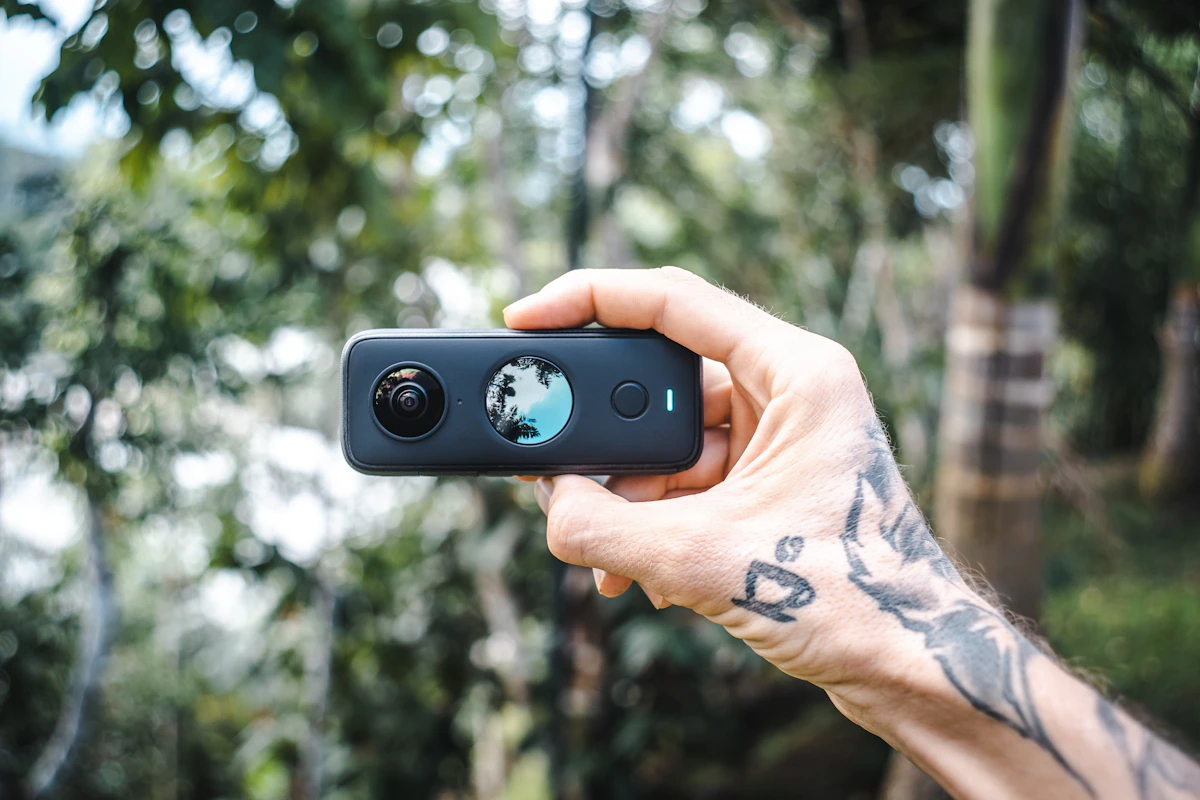
The Insta360 X6 launched August 12, 2026, at $699.99 — and the hardware specs are genuinely hard to argue with. Dual 1/1.1-inch Sony sensors. 8K/50fps. Native Dolby Vision. IP68 waterproofing to 20 meters, no case required. For a pocketable 360 camera, that’s a serious sheet.
But $700 buys a lot of camera. The real question isn’t whether the X6 is technically impressive — it clearly is. The question is whether the performance gap over cheaper rivals justifies the price in actual workflows.
Key Takeaways
- The Insta360 X6 costs $699.99 at launch and outperforms both the GoPro Max 2 ($499.99) and DJI Osmo 360 on nearly every measurable hardware spec.
- Dual 1/1.1-inch Sony sensors deliver up to 14.5 stops of dynamic range and 8K/50fps video — Insta360 claims 300% more light per pixel vs. the X5, though real-world testing puts the visible improvement closer to 20–30%.
- IP68 waterproofing to 20 meters case-free is a genuine differentiator: the GoPro Max 2 tops out at 5 meters, and the DJI Osmo 360 at 10 meters.
- The mobile app crashed repeatedly on iPhone 13 hardware during testing; Insta360 now lists iPhone 15 as the minimum capable device — a compatibility wall worth knowing about before you buy.
- X4 and X5 owners likely don’t need this upgrade unless low-light performance is a specific bottleneck in their work.
The 360 Camera Market in August 2026
360 cameras spent most of the early 2020s as a niche product. Adventure sports. Real estate walkthroughs. The occasional viral clip. But the category has been shifting, driven by three things happening at once.
Reframing workflows changed the math. Shooting everything and deciding framing in post — rather than chasing a shot with a gimbal in real time — turns out to be genuinely useful across documentary work, solo travel content, and commercial shoots. According to Forbes’ review of the X6, reframed 4K footage cropped from 8K 360 video now “approaches flagship smartphone quality” — enough for one reviewer to replace a $2,700 Sony camera on a professional shoot. That’s not a casual claim.
Sensor technology caught up. The jump from 1/2-inch sensors, which were standard a few years ago, to the 1/1.1-inch sensors in the X6 closes the low-light gap between 360 cameras and conventional mirrorless setups in a meaningful way. Not all the way. But meaningfully.
Competitors got serious. GoPro’s Max 2 and DJI’s Osmo 360 are real products with real specs. The X6 doesn’t exist in a vacuum — it has to justify a $200 premium over GoPro and a larger gap over DJI. That context is what makes any honest review complicated.
Sensor and Image Quality: The Core Upgrade
The sensor jump is the X6’s strongest argument. The 1/1.1-inch custom Sony sensors represent a 33% size increase over the X5’s 1/1.3-inch sensors, translating to 14.5 stops of dynamic range — strong for any camera in this form factor.
Insta360’s marketing claims “300% more light per pixel” over the X5. That number needs context. CNET’s testing put the real-world improvement closer to 20–30% visible in finished footage. Still meaningful, especially for shoot-everything-then-reframe workflows where cropped footage loses resolution and sensor noise becomes more visible. But not three times better.
The 10-bit color depth across all modes, including low-light PureVideo, and native in-camera Dolby Vision are legitimately new additions — not spec sheet padding. DaVinci Resolve 22 compatibility is also a first for any 360 camera and matters for professional post workflows.
One real limitation: 8K caps at 50fps rather than 60fps. For North American creators delivering at 30fps, that’s fine. For anyone targeting 60fps slow motion, it’s a gap worth knowing.
Durability and Hardware Build
IP68 to 20 meters, case-free. That’s the single biggest differentiator over both main competitors, and it’s not close. According to TechRadar’s testing, the GoPro Max 2 manages 5 meters without a case. DJI Osmo 360 handles 10 meters. The X6’s 60-meter rating with the dive case extends that gap further for underwater use.
The new lenses are claimed to be 5x more scratch-resistant than the X5’s, and they’re cheaper to replace — which matters because lens scratches are the most common failure mode for 360 cameras. The DJI Osmo 360 uses non-replaceable lenses, which means one bad scratch turns into a hardware replacement conversation.
Battery life: Insta360 claims 140 minutes at 8K/30fps. TechRadar’s reviewer recorded 136 minutes in real-world testing. That’s unusually close to spec — most cameras don’t clear 90% of their claimed battery figures. Zero overheating during continuous filming was also confirmed. Both numbers are worth taking seriously.
Software: The Weak Link
The hardware story is strong. The software story is messier.
The Insta360 mobile app crashed repeatedly during editing and export on an iPhone 13. That’s not an edge case — it’s a current-generation device. Insta360 now lists iPhone 15 as the minimum capable device, which creates a compatibility wall that will block a meaningful portion of users from day one.
The AI Director feature — which auto-edits footage overnight via in-camera processing — failed to function fully on either iOS or Android during TechRadar’s testing. Desktop performance was stable on an M2 MacBook Air using Insta360 Studio, but the desktop app lacks the AI editing tools entirely. So the features that don’t work on mobile also aren’t available on desktop.
That’s a real gap for a $700 camera. This approach fails when the software can’t keep pace with the hardware, and right now it can’t.
Competitive Comparison
| Feature | Insta360 X6 | GoPro Max 2 | DJI Osmo 360 |
|---|---|---|---|
| Price | $699.99 | $499.99 | From ~$450 |
| Max Resolution | 8K/50fps | Lower | Similar specs |
| Sensor Size | 1/1.1-inch (dual) | Smaller | Comparable |
| Waterproof (no case) | 20 meters | 5 meters | 10 meters |
| Replaceable Lenses | Yes | Yes | No |
| Internal Storage | 47GB + microSD | None listed | Limited |
| 10-bit / Dolby Vision | Yes | No | No |
| App Ecosystem | Crashes on older iPhones | Subscription-based AI | Sideload required (Android) |
| Best For | Pros, adventurers, water sports | Budget-conscious buyers | Mid-range performance |
The DJI Osmo 360 nearly matches the X6 on hardware specs at a lower price — but the non-replaceable lens design is a long-term ownership risk, and requiring sideloading outside the Play Store creates friction for Android users. GoPro’s AI editing is cloud-dependent and subscription-gated. The X6 processes in-camera with no ongoing fees — when it works.
Who Gets Real Value Here, and Who Should Wait
Professional and semi-professional creators get the clearest case. DaVinci Resolve 22 integration, 10-bit color, Dolby Vision, and the shoot-everything workflow all point toward production use. If 8K reframing can consistently deliver footage that replaces a $2,700 Sony camera on a professional shoot — as Forbes’ data suggests — then $700 is a reasonable production tool investment.
Action sports and outdoor users should take the waterproofing numbers seriously. Twenty meters case-free versus 5 meters with GoPro is a genuine capability difference, not a marketing delta. Pair that with scratch-resistant replaceable lenses and a real-world 136-minute battery, and the X6 holds up well in demanding conditions.
Casual users and X4/X5 owners face a harder calculation. CNET explicitly recommends that X4 and X5 owners skip this generation unless low-light performance is a specific pain point. The upgrade is better — not transformative. Spending $700 on incremental improvement when the previous camera still works is a tough sell.
The near-term variable is software stability. If Insta360 ships updates that fix the iPhone crash issues and get AI Director working reliably within 4–8 weeks, the software gap closes fast. If it takes six months, early adopters will have paid $700 for a partial product experience.
What Comes Next
The Insta360 X6 earns its “best consumer 360 camera” label on hardware alone. The sensor upgrade is real, the waterproofing lead over GoPro is substantial, and native Dolby Vision with DaVinci Resolve integration reflect a camera maturing into a professional tool.
The software is a problem. Not a fatal one — but a genuine one at this price.
The short version of what the data shows:
- Real-world battery life (136 min) nearly matches spec (140 min) — rare for this category
- Sensor improvement is 20–30% visible in footage, not the marketed 300%
- IP68 to 20m case-free leads the 360 market by a significant margin
- Mobile app requires iPhone 15+ for reliable performance; AI Director remains buggy at launch
Insta360 will push app updates quickly — their competitive position depends on it. Expect meaningful stability improvements within 60 days of launch. And if the software catches up to the hardware over the next six to twelve months, the X6 will likely hold the top spot through mid-2027. DJI and GoPro would need sensor-level upgrades to compete on image quality, not just price.
Buy it if waterproofing, low-light 8K, or professional post workflows are core requirements. Wait for a software patch — or a price drop — if you’re buying primarily for the AI editing features.
References
- Insta360 X6 Review: The King of 360 Cameras Reclaims Its Crown
- I test 360 cameras for a living and the new Insta360 X6 is my favorite — but the price is hard to sw
- Insta360 X6 review: A 360 camera with a little something for everyone - Engadget
Photo by Maik Kleinert on Unsplash