eVTOL Air Taxi Booking: Is Autonomous Flight Coming Sooner Than We Think?
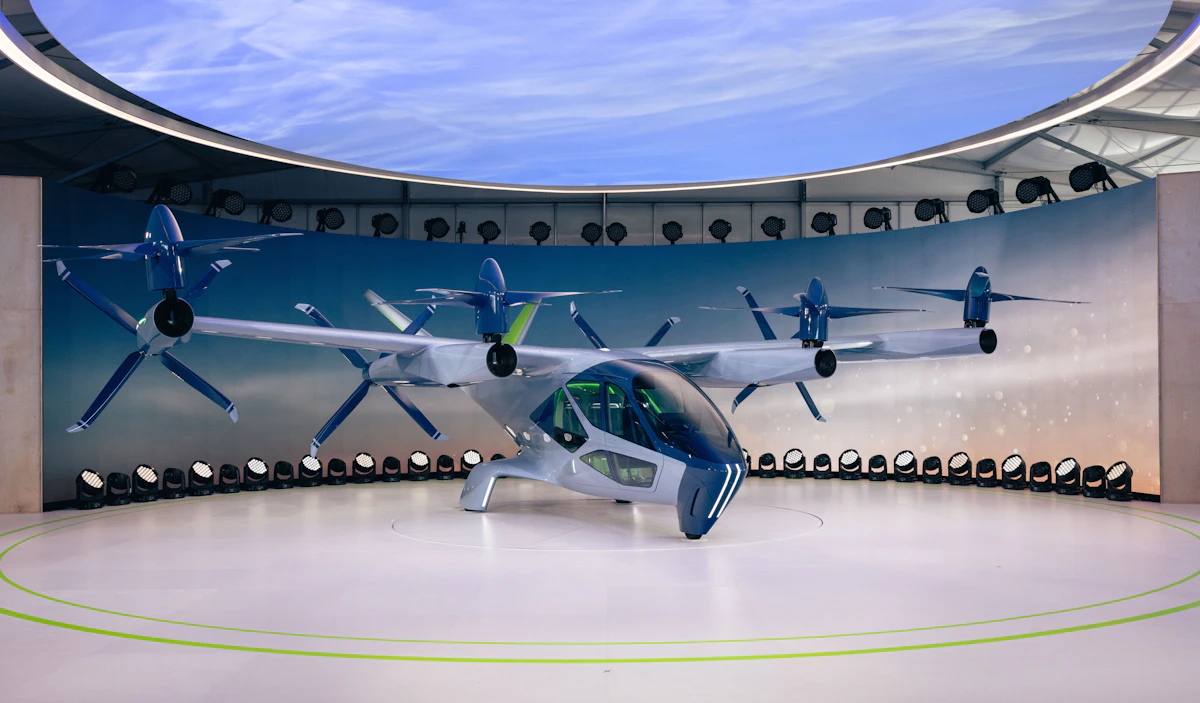
Eight FAA-approved pilot programs. Commercial launches starting summer 2026. And China’s EHang already three years ahead on autonomous passenger flights. The question isn’t whether eVTOL air taxi booking becomes real — it’s whether the U.S. regulatory machine can match the pace of the technology underneath it.
Closer than most people expect. But with sharper edges than the press releases suggest.
Key Takeaways
- The FAA launched eight eVTOL Integration Pilot Programs (eIPP) in summer 2026, covering routes from Manhattan to the Gulf of Mexico, under President Trump’s “Unleashing American Drone Dominance” executive order.
- China’s EHang received full type certification in 2023 and has operated autonomous commercial passenger flights for approximately three years, putting U.S. competitors measurably behind.
- Joby Aviation sat at 97% FAA compliance completion since 2023 — full type certification is expected later in 2026, with the one-in-one-billion flight-hour safety threshold as the primary bottleneck.
- Initial eVTOL air taxi booking pricing is projected at $100–$150 per trip, with mainstream adoption not expected until 2028–2030.
- Battery weight (1,000–2,000 lbs, roughly half total aircraft weight) limits flight time to 15–20 minutes, constraining viable urban routes to 10–15 miles.
How We Got Here
Three years ago, eVTOL felt like a PowerPoint category. Promising renders. Vague 2025 timelines. Venture capital enthusiasm disconnected from physical reality.
2026 looks different.
The FAA’s eIPP framework, approved under Transportation Secretary Sean Duffy, selected eight programs from 30 applicants. According to New Atlas, this falls under an executive order explicitly designed to accelerate approvals for electric aircraft and unmanned aerial systems. That’s a meaningful policy shift — from passive certification processes to active program acceleration.
Key players with skin in the game right now: Joby Aviation, Archer Aviation, BETA Technologies, Wisk, Elroy Air, Reliable Robotics, and Ampaire. These aren’t stealth startups anymore. Joby has logged thousands of test flights. BETA Technologies has flying hardware that Business Insider reporters have actually ridden. The hardware exists. It works. The bottleneck is regulatory, not mechanical.
EHang’s 2023 full type certification in China changed the framing of this debate entirely. Autonomous commercial passenger flights have been operating in Asia for roughly three years. That’s not a future scenario — it’s a running experiment with real passenger data accumulating while U.S. competitors wait on paperwork.
Dubai is building vertiport infrastructure before aircraft certification, not after. According to Air Taxi Central, Skyports Infrastructure identifies this pre-build model as critical — unified government coordination eliminates the regulatory fragmentation that’s slowing other cities. Dubai’s commercial launch is projected for 2026. That’s this year.
The Autonomy Question Is Already on the Table
The eIPP program isn’t just about piloted air taxis. North Carolina’s approved program explicitly includes autonomous operations extending into Virginia. Albuquerque’s program focuses specifically on autonomous flight development in direct coordination with the FAA.
Joby’s “Superpilot” system — their approach to reducing pilot workload toward eventual autonomy — is named in the regulatory framework. That’s not a research project. That’s a company negotiating the certification pathway for pilotless commercial operations with the FAA right now.
The safety threshold doing the heavy lifting: one-in-one-billion flight hours. According to New Atlas, that’s approximately 1,500 times safer per mile than driving. Meeting that standard for any aircraft is hard. Meeting it for software-controlled autonomous systems with no pilot backup is a different order of difficulty entirely — which explains why Joby sat at 97% completion for three years without crossing the finish line.
The Technical Constraints Are Real and Specific
According to Air Taxi Central, battery packs weigh between 1,000 and 2,000 pounds — roughly half the total aircraft weight — and deliver about 15–20 minutes of flight time. That’s enough for urban hops of 10–15 miles. Manhattan to JFK? Tight. Dallas to Austin? Not happening on a single charge.
This isn’t a flaw that gets patched in software. It’s physics. Battery energy density improvements are incremental, not exponential. The eVTOL air taxi booking use case that works in 2026 is specific: dense urban corridors, short distances, high-value time savings. Not regional travel. Anyone pitching this as a replacement for commuter rail or short-haul flights is getting ahead of the engineering reality.
The redundancy story is genuinely impressive, though. Six to eight electric motors mean a single-motor failure is non-critical — backup systems activate automatically, and some designs include whole-aircraft parachutes. Compare that to a single-engine helicopter, where one failure is catastrophic.
Where the Key Players Actually Stand
| Criteria | Joby Aviation | Archer Aviation | EHang | BETA Technologies |
|---|---|---|---|---|
| FAA Status | ~97% type cert complete | Near-simultaneous with Joby | Full cert (China, 2023) | Flight-tested hardware |
| Design | 4 tilting propellers | Multi-rotor tilting | Fixed multi-rotor | Fixed-wing/VTOL hybrid |
| Autonomy Plans | “Superpilot” system | Piloted first | Full autonomous operation | Piloted initially |
| U.S. Launch | Late 2026 target | Late 2026 target | U.S. market TBD | eIPP participant |
| Primary Route Focus | Urban air taxi | Urban air taxi | Cargo + passenger | Cargo + regional |
| Key Risk | Cert timeline slippage | Same regulatory path as Joby | U.S. regulatory entry | Infrastructure gaps |
Joby and Archer are essentially racing the same regulatory clock on overlapping timelines. EHang has the operational data advantage but faces a separate U.S. market entry problem — Chinese certification doesn’t transfer to FAA standards. BETA Technologies brings a different angle: their hardware got real passenger coverage from Business Insider in June 2026, signaling they’re past pure demo stage.
The trade-off that matters most: Joby’s tilting-propeller design is more mechanically complex but more efficient at cruise speed. EHang’s simpler fixed-rotor design made autonomous certification easier in China. That design philosophy difference might explain the three-year certification gap between the two companies.
Who Moves First and What Triggers the Rest
For early adopters and urban commuters: The $100–$150 per-trip pricing makes eVTOL air taxi booking competitive with premium ground transport in specific scenarios — airport runs, cross-city meetings, time-sensitive medical transport. Not mass transit. The first real market is time-poor, location-specific, and probably corporate-expense-account driven.
For infrastructure investors and city planners: Dubai’s pre-build model is the template worth watching. Cities that wait for aircraft certification before building vertiports will be two to three years behind cities that don’t. The FAA’s 13-state Pennsylvania collaborative and the four-state Utah program suggest U.S. regional infrastructure thinking is accelerating — but execution speed varies wildly between unified markets like Dubai and fragmented U.S. jurisdictions.
For developers and platform builders: The eVTOL air taxi booking layer — scheduling, dynamic pricing, real-time airspace coordination — doesn’t exist yet at commercial scale. The companies building that infrastructure stack now will hold the same positional advantage that Stripe held in payments circa 2012. Watch what Joby and Archer announce on the software and API side as their hardware certifications close.
What to watch in the next six months:
- Joby’s full FAA type certification announcement (expected late 2026)
- First fare-paying passenger flights under the eIPP programs
- EHang’s U.S. market entry strategy, if any
- Battery energy density announcements from major suppliers — any jump above current 250–300 Wh/kg benchmarks reshapes the range math entirely
This approach can fail, too. If Joby’s final 3% of FAA compliance surfaces unexpected failure modes, timelines slip across the entire industry — not just for one company. Regulatory momentum built on a single leading certification could unravel quickly if that certification stalls.
What the Next 12 Months Actually Decide
The data from summer 2026 makes one thing clear: eVTOL air taxi booking isn’t a 2030 story anymore. It’s a late-2026 story for limited routes, with 2028–2030 as the mainstream inflection point.
The signal that matters most is FAA policy direction — it shifted from passive to active, and eight eIPP programs represent real regulatory momentum, not just promises. Autonomy is already embedded in the regulatory framework, not sitting on an R&D roadmap. Battery physics set the real ceiling: 10–15 mile urban routes work; regional travel doesn’t. And China’s three-year lead on autonomous passenger flights is the competitive pressure forcing U.S. acceleration faster than the agency would naturally move.
Two questions determine everything else from here. Can Joby close that final 3% of FAA compliance and land type certification before year-end? And does the eIPP program generate enough real operational data to accelerate the autonomy certification pathway — or does it surface new failure modes that push timelines back?
Watch Joby’s certification announcement. That single data point will tell you whether “autonomous flight coming sooner than we think” gets answered with “yes, this year” or “yes — but not quite yet.”
Sources: New Atlas — FAA eIPP Program | Air Taxi Central — How eVTOL Aircraft Work
References
- I Flew on a One-of-a-Kind Electric Plane That Could Reshape Air Travel - Business Insider
- eVTOL Goes Elite: Air Taxis Land in the Language of Luxury - Hype Luxury Blog
Photo by Hyundai Motor Group on Unsplash