Meta Smart Glasses Privacy Risk: Should You Worry Near Them?

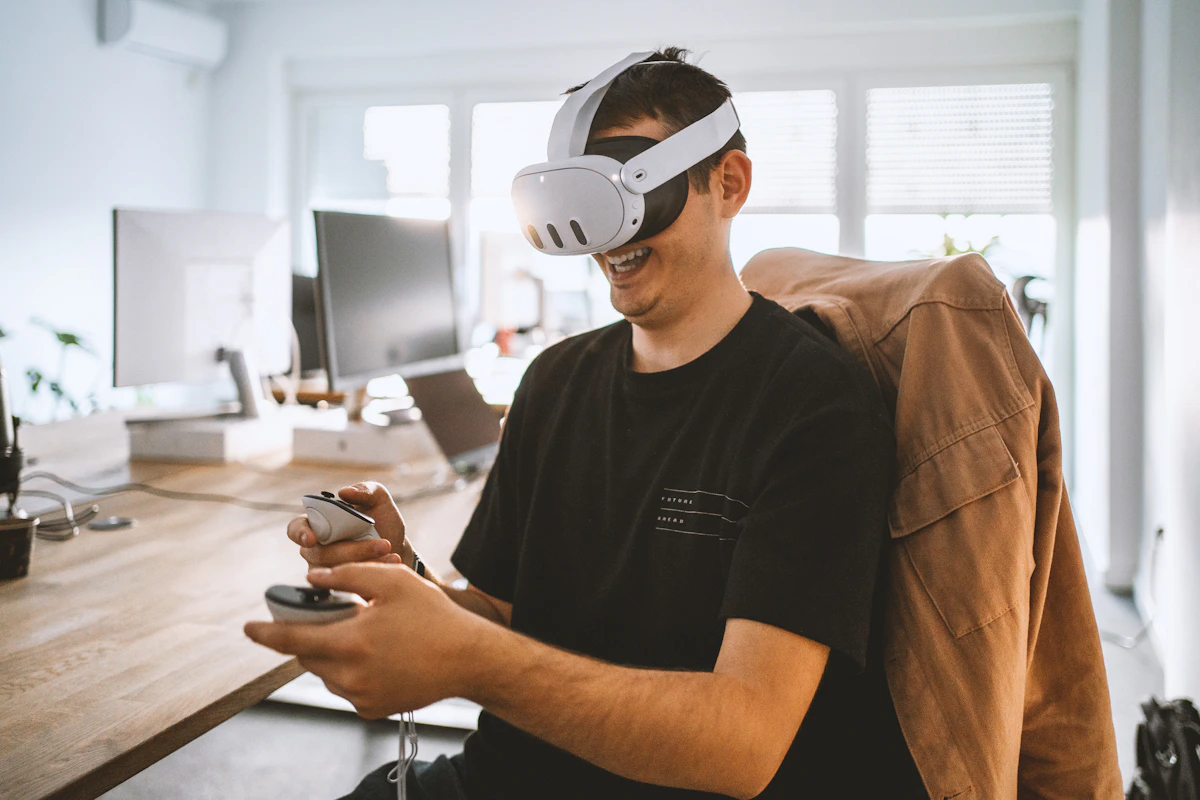
Seven million pairs of Ray-Ban Meta smart glasses are already out in the world. People are wearing them in coffee shops, gyms, offices, and parks — and most bystanders have no idea they’re being filmed.
That’s not a hypothetical. It’s the current market reality as of mid-2026. And the privacy debate around these devices has shifted from “could this be misused?” to “this is already being misused.” The question of whether you should worry if people wear them near you is no longer a thought experiment. The lawsuits, the leaked data reports, and the sales numbers make it a live issue.
The core argument: the risk isn’t uniformly distributed, but it’s real, poorly disclosed, and structurally harder to solve than Meta’s public statements suggest.
What’s covered below:
- What the data actually shows about surveillance incidents and data handling
- Where Meta’s privacy architecture fails — and where it holds
- How this compares to Google Glass and what that historical precedent means
- What you should actually do if you’re operating in sensitive environments
Key Takeaways
- Meta’s Ray-Ban smart glasses have sold over 7 million units and hold 80%+ market share in AI glasses — making them the dominant platform in an emerging surveillance-capable wearable category.
- Kenyan third-party contractors hired by Meta were exposed to sensitive user recordings — including nudity and financial documents — triggering class action lawsuits filed in early 2026.
- The recording indicator light is reportedly too dim to detect in daylight, making covert filming a practical risk, not just a theoretical one.
- Meta has not publicly defined what “guardrails” separate reviewed from non-reviewed media, leaving users and bystanders with no reliable audit mechanism.
- Apple, Google, and Snap are all building competing products with the same fundamental architecture — meaning this privacy gap will expand, not contract.
From Novelty to Ubiquity, Faster Than Expected
Meta launched its first Ray-Ban smart glasses in 2021. They were a curiosity. By 2025, according to BBC News, the product had crossed 7 million units sold — making it among the fastest-growing consumer electronics ever recorded. That growth rate matters because most privacy infrastructure, legal frameworks, and social norms around wearable cameras were built for a world with far fewer of these devices.
The glasses record with a simple frame touch. The camera is nearly invisible. The recording indicator light is so dim that it’s effectively undetectable in daylight — a design choice that has drawn sustained criticism from privacy researchers and journalists alike.
The crisis point came in early 2026. Reports emerged that third-party contractors in Kenya, hired by Meta to review AI training data, had been exposed to sensitive recordings captured through the glasses — including nudity, sexual content, and users’ banking records. According to CNET’s reporting, this triggered a class action lawsuit against Meta.
Meta’s response: data is only reviewed when AI services are actively used, and Cloud Media features — which send footage to Meta’s servers — are opt-in and disabled by default. But Meta hasn’t publicly defined what “guardrails” actually mean in practice, and there’s no encrypted or private AI mode available on the glasses.
Apple, Google, and Snap are all building competing products. The market is moving fast. Regulatory frameworks aren’t keeping pace.
The Actual Surveillance Mechanics — What’s Technically Happening
When you walk past someone wearing Ray-Ban Meta glasses, three distinct scenarios are possible.
Scenario A — Local storage only. They filmed you, the footage stays on their phone. No human at Meta sees it. No AI processes it. This is the default state for most users. The privacy risk here is roughly equivalent to someone pointing a phone at you.
Scenario B — AI services active. The wearer asked the glasses a visual question, or used translation or analysis features. That footage gets sent to Meta’s servers. Meta claims this is also exempt from human annotation — but since the “guardrails” aren’t defined publicly, there’s no independent way to verify that claim.
Scenario C — Cloud Media enabled. The wearer opted in to voice-command photo sharing or Autocapture. Footage goes to Meta’s servers, where the contractor review incidents actually occurred. This is opt-in, but the lawsuit suggests the review process wasn’t disclosed adequately to users.
The practical problem: bystanders can’t know which scenario they’re in. And the glasses don’t signal any of this to anyone except the wearer.
The Indicator Light Problem — A Structural Design Failure
This is the most concrete, non-speculative issue. BBC News reports that men have systematically used the glasses to film women in public without consent, posting the footage online. The indicator light — Meta’s primary technical answer to the covert filming concern — doesn’t function as a meaningful deterrent in real-world lighting conditions.
Google Glass had a similar controversy when it launched in 2013, leading to bans in bars, casinos, and movie theaters. It was withdrawn within two years. Former Meta AI researcher David Harris has predicted Ray-Ban Meta glasses could face comparable backlash.
The difference: Google Glass sold far fewer units before the backlash hit. Seven million pairs creates a different enforcement problem entirely.
Attorney David Kessler, cited by BBC News, notes corporate clients are already struggling with implications for legally recording-restricted spaces — courthouses, hospitals, locker rooms. The legal framework for smartphones took years to develop. Glasses move faster and signal less.
This approach can also fail in regulatory environments like the EU, where GDPR provisions on biometric data collection in public spaces create direct legal exposure — not just reputational risk — for companies shipping hardware that can’t reliably signal when it’s recording.
Meta’s Historical Pattern — Why the Trust Gap Is Wider Than Usual
Meta paid a $725 million settlement in the Cambridge Analytica case. That history shapes how regulators and users interpret current disclosures. When Meta says “we only review data under specific conditions,” the absence of public definitions for those conditions isn’t a minor omission — it’s the exact opacity that enabled Cambridge Analytica.
Meta spokesperson Tracy Clayton placed responsibility for privacy violations on individual users. That’s legally defensible in the short term. It doesn’t address the design question: why does a device with camera-recording capability ship with an indicator light that’s functionally invisible in daylight?
The answer, almost certainly, is that a clearly visible recording light would reduce adoption. That’s a product decision dressed up as a privacy position.
Comparison: Meta Ray-Ban vs. Google Glass — Then and Now
| Factor | Google Glass (2013–2015) | Meta Ray-Ban (2025–2026) |
|---|---|---|
| Units sold at controversy peak | ~100,000 | 7,000,000+ |
| Camera visibility | Obvious, front-facing | Nearly invisible |
| Recording indicator | LED, visible | Reportedly too dim in daylight |
| AI data pipeline | Minimal | Active, cloud-connected |
| Third-party data review | Not documented | Confirmed, lawsuits filed |
| Facial recognition plans | No | Reportedly in development |
| Market outcome | Withdrawn 2015 | Expanding; competitors entering |
| Legal exposure | Limited | Class action filed March 2026 |
The scale difference is the critical variable. Google Glass failed fast, which limited the blast radius. Meta’s glasses are past the threshold where social friction alone can reverse adoption — 7 million units is mainstream consumer electronics territory, not an enthusiast product. And with competitors preparing to launch their own versions, the window for meaningful design-level intervention is closing.
Practical Implications: Who Carries the Real Risk
Security and compliance professionals face the most immediate exposure. Hospitals, law firms, and financial institutions already prohibit smartphones in certain areas. The Ray-Ban Meta form factor makes existing visual policies unenforceable without explicit no-glasses language. The practical action: update recording device policies to include camera-equipped wearables explicitly. Don’t assume existing smartphone language covers it — in most cases, it doesn’t.
Individual professionals in sensitive environments — journalists with sources, lawyers with clients, anyone handling confidential documents — should treat these glasses the way they’d treat an unknown phone pointed at them. If someone’s wearing them in a context where you’d object to recording, you’re entitled to ask. “Are you recording?” is a reasonable question. It’s also one that most people currently don’t think to ask.
Everyday users considering buying the glasses need to understand one concrete thing: enabling Cloud Media means your footage goes to servers reviewed by contractors. That includes footage of other people who never consented. The default-off setting helps, but it requires active awareness to maintain as Meta rolls out new AI features that may reset or quietly reframe those defaults.
What to watch next:
- Meta’s facial recognition integration timeline — CNET notes this was potentially being added in 2025–2026
- EU regulatory response under GDPR, which has specific provisions on biometric data collection in public spaces
- Whether the 2026 lawsuits produce consent disclosure requirements that change hardware or software defaults
The Problem Scales With the Market
The risk here has a nuanced answer: yes, conditionally — and the conditions are getting harder to verify.
The covert filming incidents are documented, not theoretical. The contractor data review happened. The indicator light doesn’t reliably signal recording in real conditions. And every competitor entering this market is building the same camera-plus-cloud architecture.
Key insights to carry forward:
- Risk varies by use case, but the lack of transparent guardrails makes the full scope unverifiable
- The scale — 7M+ units — separates this from the Google Glass episode. Social backlash alone won’t resolve it
- Legal and policy frameworks are running behind the hardware
- Facial recognition integration would materially change the risk profile for bystanders
The next six to twelve months will likely bring EU enforcement actions, further lawsuit developments, and the first competing AI glasses products reaching consumers. Watch those regulatory filings — they’ll define what disclosure standards this industry is actually held to.
Design choices that make cameras invisible and indicator lights unreadable aren’t accidents. They’re decisions. Treat them accordingly.
Photo by Microsoft Copilot on Unsplash