Foldable iPhone Ultra Liquid Metal Hinge Worth Waiting For
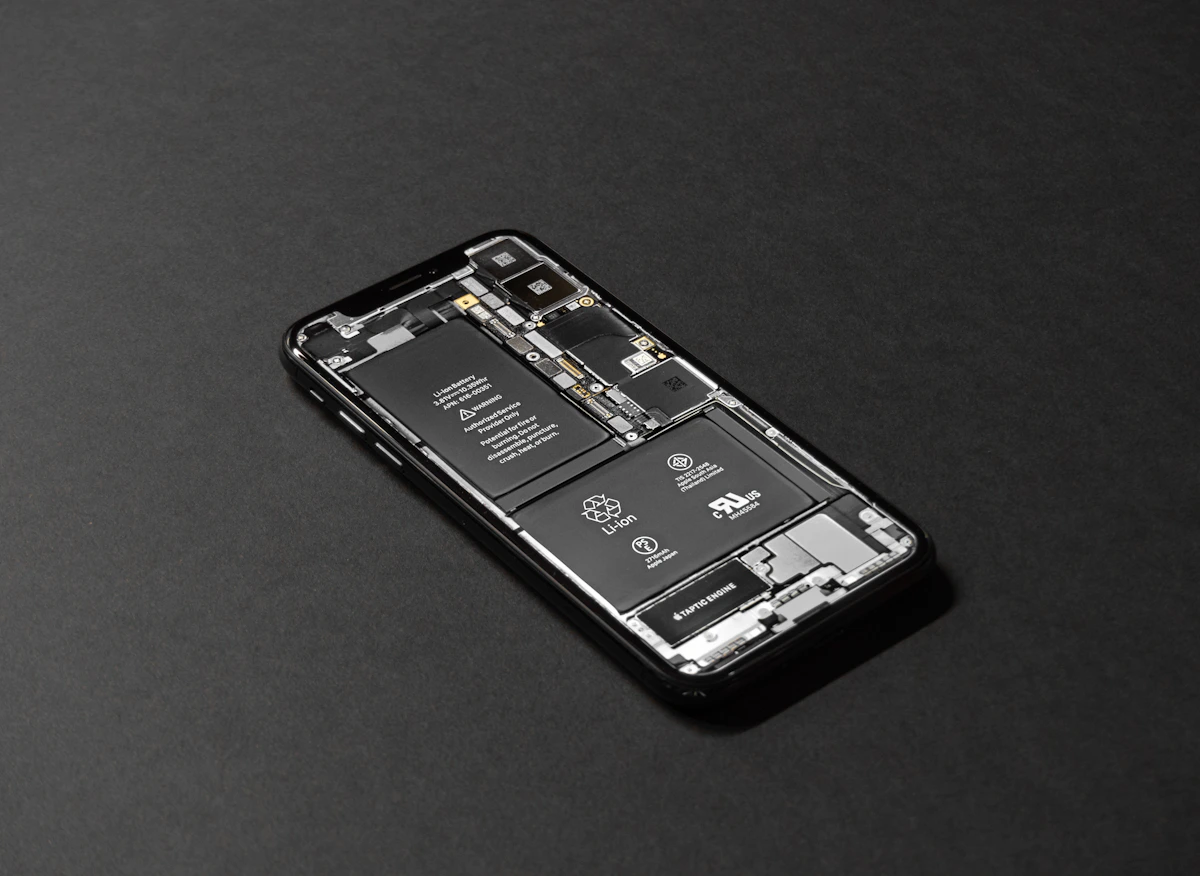
Apple’s foldable iPhone just cleared a critical milestone — prototype units are now in the hands of global carriers for network compatibility and certification testing. That’s not a rumor. That’s a production pipeline signal. And the hinge material chosen to make it happen has been 16 years in the making.
The debate over whether the foldable iPhone Ultra’s liquid metal hinge justifies the wait finally has hard data behind it. According to leaker Fixed Focus Digital via MacRumors, Apple confirmed the liquid metal hinge design after months of wavering between that and 3D-printed titanium alloy. Mass production starts July 2026. September launch targets alongside iPhone 18 Pro. Starting price: $2,000.
The question isn’t whether it’s coming. It’s whether the engineering choice justifies the premium and the wait.
Key Takeaways
- Apple’s foldable iPhone Ultra prototype units entered global carrier testing in June 2026, confirming the device has cleared internal hardware reviews and is targeting a September 2026 launch.
- The liquid metal hinge — sourced exclusively from Dongguan EonTec — is engineered to withstand hundreds of thousands of open-close cycles, directly targeting the hinge failure problems that plagued early Samsung Galaxy Z Fold devices.
- Apple has held an exclusive Liquidmetal Technologies license since 2010 but previously limited use to SIM ejector tools; the iPhone Ultra marks the first structural deployment of the material.
- At approximately $2,000, whether the foldable iPhone Ultra is worth waiting for hinges entirely on whether Apple’s durability engineering outpaces the field — current data suggests it does.
Background: 16 Years of Liquidmetal Sitting in a Drawer
Apple signed its exclusive licensing deal with Liquidmetal Technologies in 2010. For 16 years, that agreement produced exactly one consumer-facing use case: the tiny pin that ejects your SIM card tray.
That’s not because liquid metal is unimpressive. It’s because amorphous metal alloys — sometimes called metallic glass — are genuinely difficult to work with at scale. The material has no crystalline grain structure, which gives it higher yield strength than titanium and far better elasticity under repeated stress. It doesn’t fatigue the way conventional metals do. But precision casting at the scale Apple needs for a structural hinge component is a fundamentally different engineering problem than casting a 1-gram ejector pin.
The foldable phone market forced the issue. Samsung launched its first Galaxy Z Fold in 2019. Early hinge failures were well-documented — crease depth, debris ingress, premature wear. Google’s Pixel Fold, launched in 2023, used a fluid-friction hinge that improved crease visibility but still relied on conventional steel alloy construction. By 2025, the foldable segment had a credible durability problem: no mainstream device had convincingly solved long-term hinge wear at scale.
Apple watched all of this. According to MacDailyNews reporting, analyst Ming-Chi Kuo had previously corroborated the liquid metal hinge direction, meaning Apple’s supply chain choices here aren’t last-minute pivots. The Dongguan EonTec exclusive supplier arrangement suggests Apple locked this down well before the April 2026 timeline when Fixed Focus Digital still reported uncertainty between liquid metal and titanium alloy.
Why Liquid Metal Beats Titanium for a Hinge
Titanium is Apple’s current flagship structural material — used across iPhone 15 Pro, 16 Pro, and 17 Pro frames. It’s strong, light, and corrosion-resistant. So why reject 3D-printed titanium for the hinge?
Three reasons. Fatigue resistance. Moldability. Surface finish consistency.
Titanium alloys have crystalline grain boundaries. Under cyclic stress — like the repeated folding a hinge experiences — those grain boundaries are where cracks nucleate and propagate. Liquid metal’s amorphous structure eliminates grain boundaries entirely. No preferential failure path. Under load, it deforms elastically at stress levels that would permanently deform conventional titanium, then springs back.
3D-printed titanium adds complexity without solving this. Sintered powder-bed fusion parts have porosity and anisotropic properties depending on print orientation. For a hinge that sees stress from unpredictable angles across 200,000+ cycles, that’s not a clean engineering solution.
According to MacRumors, the hinge specification explicitly targets hundreds of thousands of open-close cycles. Liquid metal’s wear and corrosion resistance make it the more defensible choice for that spec.
This approach isn’t without risk, though. Liquid metal casting at hinge scale has limited production history. Apple’s exclusive dependency on a single supplier — Dongguan EonTec — means any manufacturing disruption has no immediate backup. That’s a supply chain concentration risk, not just a competitive moat.
The Carrier Testing Signal
Prototype units shipped to global carriers isn’t a minor checkpoint. This step requires functional hardware — not engineering mules — that can pass regulatory RF certification. Carriers don’t run compatibility testing on incomplete devices.
MacObserver notes that carrier testing precedes consumer availability and involves formal certification requirements. Getting to this stage by early June 2026 with a July mass production start is a tight but plausible timeline. Apple has shipped September products with July production starts before — iPhone supply chains are optimized for exactly this window.
The earlier reports of hinge failures during quality control, attributed to leaker Instant Digital, now look less credible. Fixed Focus Digital has consistently disputed that characterization, and carrier testing proceeding on schedule supports that counter-narrative.
Hinge Material Comparison: Liquid Metal vs. Competitors
| Criteria | Liquid Metal (Apple Ultra) | Conventional Steel (Galaxy Z Fold 6) | 3D-Printed Titanium (considered/rejected) |
|---|---|---|---|
| Fatigue resistance | Excellent — no grain boundaries | Moderate — grain boundary fatigue | Variable — depends on print orientation |
| Corrosion resistance | High — amorphous structure | Moderate — requires coating | High — titanium oxide layer |
| Weight | Low — high strength-to-weight ratio | Higher | Low |
| Precision moldability | High — near-net-shape casting | Moderate | High — additive process |
| Crease minimization | Engineered-in elasticity | Rigid — crease more visible | Moderate |
| Manufacturing maturity at scale | Limited history, exclusive supplier | Mature, well-understood | Experimental at hinge scale |
| Best for | Long-term durability at premium price | Cost-controlled mass production | Not selected |
The trade-off is clear. Liquid metal’s weaknesses are on the manufacturing side — limited supplier history, exclusive dependency on Dongguan EonTec. Apple’s exclusive Liquidmetal Technologies license means no competitor can replicate this approach without licensing or developing alternative amorphous alloys. That’s a meaningful moat, not just a spec sheet advantage.
Samsung’s Galaxy Z Fold 7, expected later in 2026, still uses conventional steel hinge construction. If Apple’s liquid metal hinge holds up over two to three years of real-world use, the durability comparison becomes decisive marketing data for iPhone Ultra 2.
How to Think About This Launch
For early adopters considering pre-order: The $2,000 entry price is real. But the case for waiting has gotten significantly stronger over the past six months. Carrier testing underway, July production start, exclusive supplier relationship — these are structural commitments, not vaporware. If you’ve been holding out since 2023 for Apple to enter foldables, the engineering case is solid. The risk isn’t the hinge. It’s first-generation software and a camera system limited to two rear lenses versus the iPhone 18 Pro’s likely three.
For Android foldable owners evaluating a switch: Touch ID replacing Face ID is the biggest friction point. Apple’s decision to use side-mounted Touch ID — rather than Face ID — on a device this large suggests internal display geometry made facial recognition impractical. That’s a real usability regression for users who rely on face unlock in low-light or masked environments. Worth weighing honestly before committing $2,000.
What to watch between now and September 2026:
- Independent durability testing once review units ship — specifically crease depth measurements after 10,000+ cycles
- Whether Apple discloses a liquid metal hinge warranty or specific cycle rating
- Samsung’s response: a Galaxy Z Fold 7 spec bump won’t match liquid metal durability, but pricing pressure at $1,799 vs. $2,000 is a real competitive variable
Conclusion
The data supports a clear verdict. The foldable iPhone Ultra’s liquid metal hinge isn’t marketing positioning — it’s engineering differentiation backed by 16 years of material exclusivity and a carrier testing milestone that confirms hardware maturity.
The summary case:
- Liquid metal’s amorphous structure solves the grain-boundary fatigue problem that conventional steel and titanium hinges don’t address
- Carrier testing in June 2026 with a July production start makes a September launch credible, not aspirational
- The $2,000 price point buys engineering that competitors can’t replicate under current material licensing constraints
- Touch ID replacing Face ID is the one legitimate concern for existing iPhone users considering the switch
Over the next 6 to 12 months, the real test shifts from spec sheets to field durability. If first-generation liquid metal hinges hold up through 18 months of daily use — the typical upgrade cycle for premium iPhone buyers — Apple will have established a durable structural advantage in the foldable segment. If failures emerge at scale, the exclusive supplier dependency on Dongguan EonTec transforms from competitive moat into supply chain liability.
The hinge is the strongest part of this product. Everything built around it is still an open question.
References
- Leaker: Foldable ‘iPhone Ultra’ Will Feature Liquid Metal Hinge - MacRumors
- Apple’s foldable iPhone ‘Ultra’ said to feature advanced Liquidmetal hinge
- r/apple on Reddit: Leaker: Foldable ‘iPhone Ultra’ Will Feature Liquid Metal Hinge
Photo by Tyler Lastovich on Unsplash