Motorola GrapheneOS Partnership Brings Privacy to Android Security
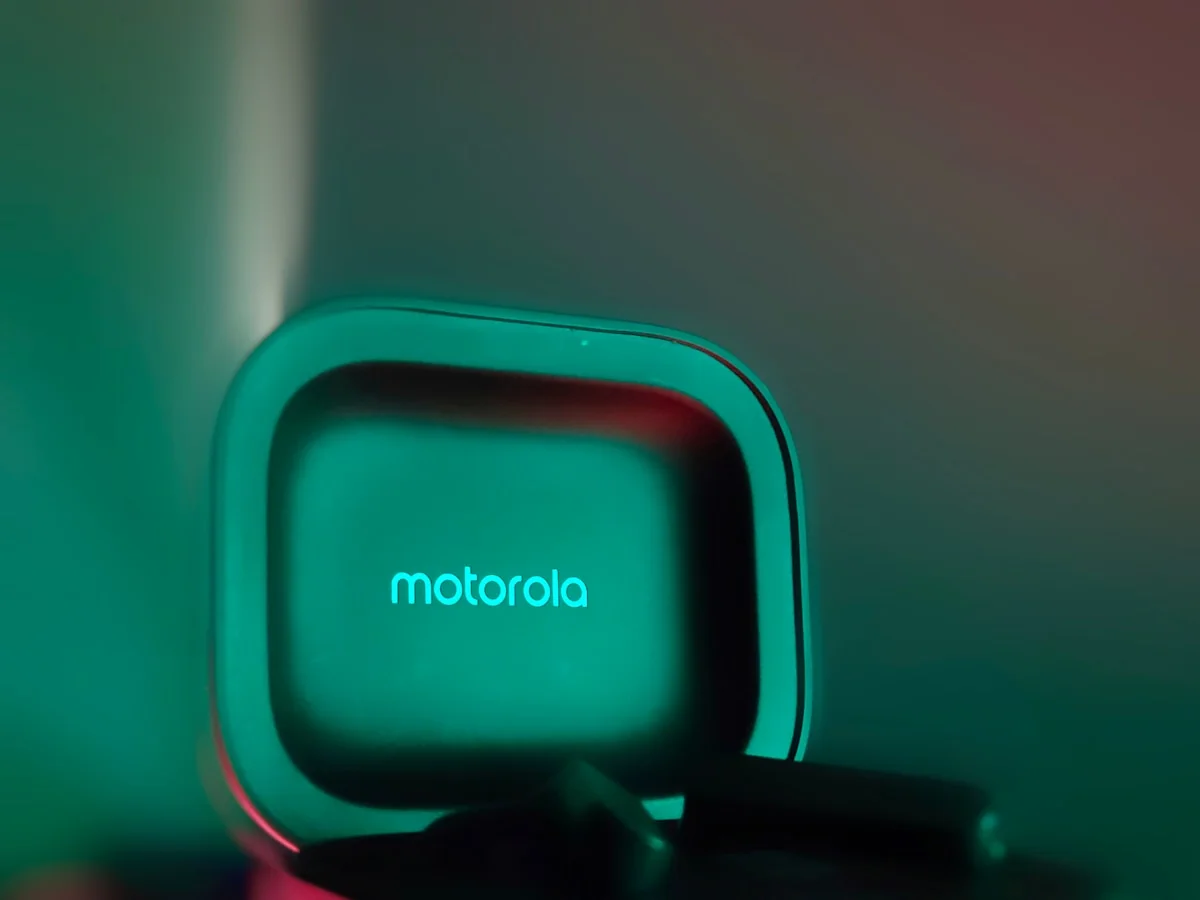
On March 2, 2026, Motorola walked into MWC Barcelona and announced something that hadn’t happened once in Android’s 18-year history: a major OEM formally committing to ship GrapheneOS on a consumer device.
That’s worth pausing on. GrapheneOS has existed since 2014. It’s earned a reputation as the most security-hardened Android variant available — used by journalists, security researchers, and privacy-conscious professionals worldwide. And for that entire stretch, it’s run exclusively on Google Pixel hardware. No Samsung. No OnePlus. No Motorola. Until now.
The Motorola GrapheneOS partnership isn’t just a product announcement. It’s a signal that enterprise demand for verifiable mobile security has hit a threshold where OEMs can’t afford to ignore it. The B2B security market is where this deal lives today — but the downstream effects will reach consumers and developers faster than the press release suggests.
Three things make this partnership worth analyzing carefully: the hardware gap that still exists, the undefined feature porting scope, and what the ThinkShield integration actually means for enterprise deployments.
Key Takeaways
- Motorola’s MWC 2026 announcement marks the first time a major Android OEM has formally committed to shipping GrapheneOS on a consumer device, according to 9to5Google.
- No existing Motorola device — including the current flagship Motorola Signature — meets GrapheneOS’s hardware requirements, meaning a new, higher-spec device is required before deployment.
- The partnership combines GrapheneOS’s hardened OS engineering with Lenovo’s ThinkShield enterprise security framework, targeting B2B deployments first.
- Motorola simultaneously announced Private Image Data (automatic metadata stripping) and Moto Analytics (fleet-wide operational monitoring) as companion enterprise security features.
- No public timeline or feature roadmap has been released, placing the partnership firmly in early-stage territory as of March 2026.
Background & Context
GrapheneOS started as a fork of CopperheadOS in 2014, eventually becoming an independent project under the GrapheneOS Foundation, a nonprofit. Its core value proposition is specific: it doesn’t just patch Android, it structurally reduces attack surface. That means hardened memory allocators, stronger app sandboxing, and system boundaries that limit what a compromised app can actually reach.
The catch has always been hardware. GrapheneOS requires devices with verified boot, strong attestation support, and specific security chip configurations. Google Pixel devices hit those requirements consistently. Most other Android OEMs don’t — not because they can’t, but because the certification overhead hasn’t been worth it commercially.
That calculus is shifting. Enterprise mobile security has become a board-level conversation. High-profile incidents — including several 2025 state-sponsored mobile espionage campaigns targeting NGOs and government contractors — drove renewed demand for hardware-backed OS integrity. MDM solutions like Microsoft Intune and VMware Workspace ONE handle access control, but they don’t address the underlying OS attack surface the way GrapheneOS does.
Motorola’s timing is deliberate. According to Help Net Security, the partnership combines GrapheneOS’s security engineering with Lenovo’s existing ThinkShield framework — a B2B security stack Lenovo already deploys across ThinkPad and ThinkCentre devices. Extending that to mobile makes structural sense for enterprise accounts that already standardize on Lenovo hardware.
The GrapheneOS Foundation’s decision to partner with an OEM directly, rather than simply publishing porting guides, also matters. It suggests the Foundation sees controlled OEM collaboration as a more reliable path to hardware compliance than waiting for OEMs to figure it out independently.
Main Analysis
The Hardware Gap Is the Critical Variable
GrapheneOS developers confirmed publicly on X that no current Motorola device meets the hardware requirements to run GrapheneOS. That’s a direct statement from the people who actually build and maintain the OS — not a hedged PR disclaimer.
This means the GrapheneOS-equipped Motorola device doesn’t exist yet. It’s a future product requiring new hardware specifications. According to 9to5Google, the planned device “represents a new, higher-spec product beyond anything currently in Motorola’s lineup.”
That’s a significant engineering commitment. Meeting GrapheneOS’s requirements means implementing specific secure enclave configurations, verified boot chains, and hardware attestation at a level most Android OEMs haven’t prioritized. Getting there requires coordination between Motorola’s hardware teams, the GrapheneOS Foundation, and likely Qualcomm, given typical Motorola chip choices. None of that happens in a quarter.
The most important part of this partnership has no confirmed timeline.
Feature Porting — Valuable, but Undefined
Separate from the GrapheneOS device itself, Motorola confirmed that select GrapheneOS security features will be ported to other Motorola devices. This is the part that affects the most users in the near term.
GrapheneOS includes capabilities like hardened memory allocation (based on a modified jemalloc), network permission controls, and sensor permission toggles that go beyond stock Android. If even a subset of those port cleanly to standard Motorola hardware, that meaningfully raises the security baseline for Motorola’s broader lineup.
The problem: Motorola hasn’t specified which features. According to Help Net Security, “specific GrapheneOS features targeted for integration have not been disclosed.” That’s a significant gap. Feature porting at the OS level is technically complex — some capabilities are tightly coupled to GrapheneOS’s hardened kernel and won’t run meaningfully on stock Android without substantial re-engineering.
This approach can fail when ported features get stripped of context. A hardened memory allocator that ships without the surrounding kernel modifications doesn’t deliver the same threat protection. Partial ports can create a false sense of security — which, in enterprise deployments, is arguably worse than no change at all.
ThinkShield Integration and the B2B Angle
The third piece of the MWC announcement — and the one most likely to generate revenue first — is the ThinkShield integration. According to Motorola News, all three security announcements connect into Motorola’s ThinkShield B2B ecosystem: the GrapheneOS partnership, Moto Analytics, and Private Image Data.
Moto Analytics gives IT administrators real-time fleet visibility: app stability, battery health, connectivity performance. That’s operationally distinct from traditional EMM tools, which focus on access control rather than device health. Private Image Data automatically strips EXIF metadata — including GPS coordinates and device identifiers — from newly captured photos. Both features are already rolling out to Motorola Signature devices.
These two are deployable now. The GrapheneOS piece is future-state.
Comparison: GrapheneOS vs. Standard Android Enterprise Security Approaches
| Feature | GrapheneOS (Planned Motorola) | Standard Android Enterprise (EMM) | Stock Android + Moto Secure |
|---|---|---|---|
| OS Hardening | Deep — memory, sandbox, kernel | None — OS unchanged | Minimal — feature additions only |
| Google Services | Optional/sandboxed | Required | Full integration |
| Hardware Requirement | High — verified boot, attestation | Low — any Android device | Low — existing Motorola devices |
| Availability | Future, unconfirmed timeline | Available now | Rolling out Q1-Q2 2026 |
| Enterprise MDM Compatibility | Limited (by design) | Full | Full via ThinkShield |
| Metadata Stripping | Supported | Not native | Yes (Private Image Data) |
| Best For | High-security B2B, defense, legal | Standard enterprise fleet management | Mid-market enterprise, immediate deployment |
The table shows the core trade-off clearly. GrapheneOS offers the strongest security posture but demands the most from hardware and timelines. Standard EMM tools work today but leave the OS attack surface untouched. Moto Secure’s Private Image Data feature lands in the middle — deployable now, meaningful for privacy, but not structural OS hardening.
For most enterprise IT teams evaluating options in Q2 2026, the realistic choice is between EMM-managed stock Android and the Moto Secure/ThinkShield stack. The GrapheneOS device is a planning item, not a procurement decision yet.
Practical Implications
Who Should Care?
Security engineers and mobile developers should watch the feature porting roadmap closely. If GrapheneOS’s network permission controls or hardened allocator logic ports to AOSP builds on non-Pixel hardware, that has implications for secure app development patterns — particularly for apps handling sensitive data in regulated industries.
Enterprise IT and security teams at organizations already using Lenovo’s ThinkShield for laptops have the clearest near-term path. Moto Analytics and Private Image Data are available now. Build familiarity with the ThinkShield mobile integration layer before the GrapheneOS device eventually ships.
Privacy-focused consumers should manage expectations. This partnership is B2B-first. The GrapheneOS device will likely carry an enterprise price premium and may ship with IT management tooling rather than as a pure consumer product.
How to Prepare or Respond
Short-term (next 1-3 months):
- Evaluate Moto Secure’s Private Image Data for current fleet deployments — it’s available now and requires no hardware changes
- Review whether existing MDM policies conflict with the ThinkShield telemetry model Moto Analytics uses
- Monitor the GrapheneOS Foundation’s public communications for hardware specification disclosures
Long-term (next 6-12 months):
- Include “GrapheneOS-compatible hardware” as a criterion in upcoming mobile device refresh planning
- Watch whether Samsung or another major OEM responds with a competing OS-hardening partnership — competitive pressure at MWC tends to move fast
- Assess whether the undefined feature porting scope warrants direct outreach to Motorola’s enterprise sales channel for roadmap clarity
Opportunities & Challenges
Opportunity: Enterprise accounts that need hardware-level OS attestation — defense contractors, legal firms handling privileged communications, financial institutions under strict data residency rules — finally have a non-Pixel path to verified GrapheneOS deployments. That’s a genuinely underserved market.
Challenge: The hardware gap means 12-24 months of uncertainty before the core product ships. Organizations that standardize on this today are betting on a roadmap with no confirmed dates and an OS with no public feature specification. That’s a planning risk most procurement teams won’t accept without contractual commitments from Motorola.
Conclusion & Future Outlook
The Motorola GrapheneOS partnership story right now is more about trajectory than product. What shipped at MWC 2026 is meaningful — Moto Analytics and Private Image Data are real, deployable, and address actual enterprise pain points. But the GrapheneOS device itself is a future commitment with no timeline, no confirmed hardware specs, and no published feature roadmap.
What to expect in the next 6-12 months:
- Hardware specification disclosure from Motorola, likely tied to a device announcement
- Clarification on which GrapheneOS features port to existing devices
- A potential competitive response from Samsung’s Knox division or a similar enterprise Android stack
The near-term signal to watch: whether GrapheneOS developers publicly confirm hardware compliance progress on X, as they’ve done historically with Pixel device assessments. That’s a more reliable indicator of real momentum than any press release.
The first major OEM committing to GrapheneOS matters structurally, even if the product isn’t shipping today. Motorola just established that GrapheneOS-level security is a legitimate commercial target, not just a niche privacy project. That changes how other OEMs calculate the ROI of hardware-level security compliance — and that shift has longer legs than any single device launch.
Photo by Rubaitul Azad on Unsplash
Related Posts
- TikTok Refuses End-to-End Encryption: Child Safety Excuse?
- Meta AI Smart Glasses Privacy: Workers Who See Everything
- Flock Camera Network Shut Down Over Public Records Ruling
- AirSnitch Wi-Fi Client Isolation Bypass Attack 2026 Explained
- Cybersecurity in 2026: Developer Threats, Vulnerabilities, and Defenses