How to Launch a Solo Dev Agency Without Employees: Step-by-Step with Real Numbers
73% of solo dev agencies bill over $8,000 in their first year — but only if they stop thinking like freelancers and start thinking like a business owner. That shift sounds philosophical, but it’s actually mechanical. It’s about what you put on your website, how you price, and which clients you pursue. Here’s the exact playbook.
Key Takeaways
- Solo dev agencies on Upwork and Toptal regularly charge $95–$175/hr by packaging services instead of selling hours
- Your first client typically arrives 4–10 weeks after positioning yourself correctly — not 4–10 days
- The “boring middle” is proposal writing: expect to spend 5–8 hours/week on outreach before the pipeline fills
- You don’t need employees — you need 2–3 reliable subcontractors you can call when scope expands
Why “Solo Agency” Beats “Freelancer” on Day One
The word “freelancer” carries a mental image: one person, one laptop, one hourly rate. The word “agency” signals process, reliability, and deliverables. Same human, completely different client expectations — and pricing ceiling.
A freelancer on Upwork charges $65–$85/hr for React work. A solo agency offering “React + product strategy + QA workflow” charges $120–$160/hr for the exact same code. The difference isn’t your skill level. It’s how you’ve packaged what you already know.
This isn’t a trick. Clients hiring agencies expect to pay more because they expect less hand-holding and more accountability. So give them that. Build a one-page website at something like framer.com (takes 2 hours, no code required). List three service packages — not an hourly rate. Something like: Startup MVP Build ($8,500), Feature Sprint Package ($3,200), and Monthly Retainer ($2,400/mo). You’re not lying about anything. You’re just leading with outcomes instead of hours.
Realistic income at this stage: $3,000–$6,000/month in months 1–3, assuming you close one small project and one retainer.
Where to Find Clients Without Cold Emailing Strangers
Most devs think they’ll get clients through LinkedIn posts or Twitter threads. Some do. Most don’t. Here’s what actually moves the needle faster.
Upwork is still the fastest place to land your first agency-priced client in 2026. The trick is your profile headline. Don’t write “Full Stack Developer.” Write “React + Node SaaS Agency | Fixed-Price Builds for Startups.” That single change filters in clients who are already thinking agency-budget. Upwork senior agency profiles average $95–$140/hr in the SaaS and fintech categories. Apply for jobs with fixed-price scopes — they tend to attract better clients than hourly gigs.
Contra (contra.com) is worth setting up a profile on because it’s zero commission and has been growing steadily through 2025–2026. The client pool is smaller than Upwork’s but the quality is higher. Rates there average $85–$130/hr for senior devs running solo operations.
Referrals from your day job network are underused. Tell three former colleagues you’ve started taking on agency work. One of them knows a startup that needs help. This costs nothing and typically produces a lead within 30 days. The conversion rate on warm referrals is 3–5x higher than cold platforms.
What to avoid early on: Fiverr. It’s a race to the bottom on price. Also avoid bidding on large enterprise contracts on SAM.gov or similar — the sales cycle is 6–18 months and you’ll burn out before you close anything.
The Subcontractor Model: How You Handle Work That’s Too Big
You don’t need employees. You need a bench. Build a list of 2–3 developers you’ve worked with before — people you trust and whose code you can review quickly. This can be former colleagues, Slack community members from communities like reactiflux or devs you’ve collaborated with on GitHub.
When a project comes in that’s too large for one person, you scope it as a fixed-price deliverable, bring in a subcontractor at $55–$75/hr, and bill the client $110–$150/hr. You manage the project, do the client calls, and handle QA. The margin funds your business overhead and pays you for the coordination work.
This is standard practice. You’re not doing anything shady. You’re acting exactly like a small creative agency does with contractors.
The legal side is simple: have subcontractors sign a basic independent contractor agreement (you can get a solid template at docracy.com or just pay a lawyer $150 for one). Include an NDA and a clause that they can’t contact your clients directly. Done.
Realistic income when you’re running one mid-size project with a subcontractor: $7,000–$14,000/month gross, with 30–45% going to subcontractor costs. Your take-home: $4,500–$9,000/month.
The Boring Middle: What Months 2–6 Actually Look Like
Here’s where most solo agencies fail. Month one is exciting — you built the website, set up the profile, told your network. Then… nothing for three weeks. This is normal and it doesn’t mean it’s not working.
The grind is proposal writing. You’ll spend 5–8 hours a week writing scoped proposals, answering client questions, and following up on leads that went cold. For every 10 proposals you send, expect 1–2 to close. That ratio improves over time as your reviews accumulate and your positioning gets sharper.
Keep a simple CRM — even a Notion table works. Track: lead source, proposal sent date, follow-up date, status. After 90 days, you’ll have real data on where your best clients come from. Double down on that channel.
One financial reality: keep your day job until you’ve had three consecutive months above $5,000. That’s the floor that tells you the pipeline is real, not luck.
Next Step
Go to upwork.com/freelancers/settings and update your profile title to include the word “agency” and one specific niche (e.g., “React SaaS Agency | Fixed-Price MVP Builds”). Then go to the job feed, filter by “Fixed Price” and “$1,000+” budget, and send three proposals today using this structure: one sentence on their problem, two sentences on your approach, one sentence on your relevant experience, and a proposed fixed price. This takes about 45 minutes.
After you send those three proposals, set a calendar reminder for 72 hours later to follow up on each one with a single short message — that follow-up doubles your response rate.
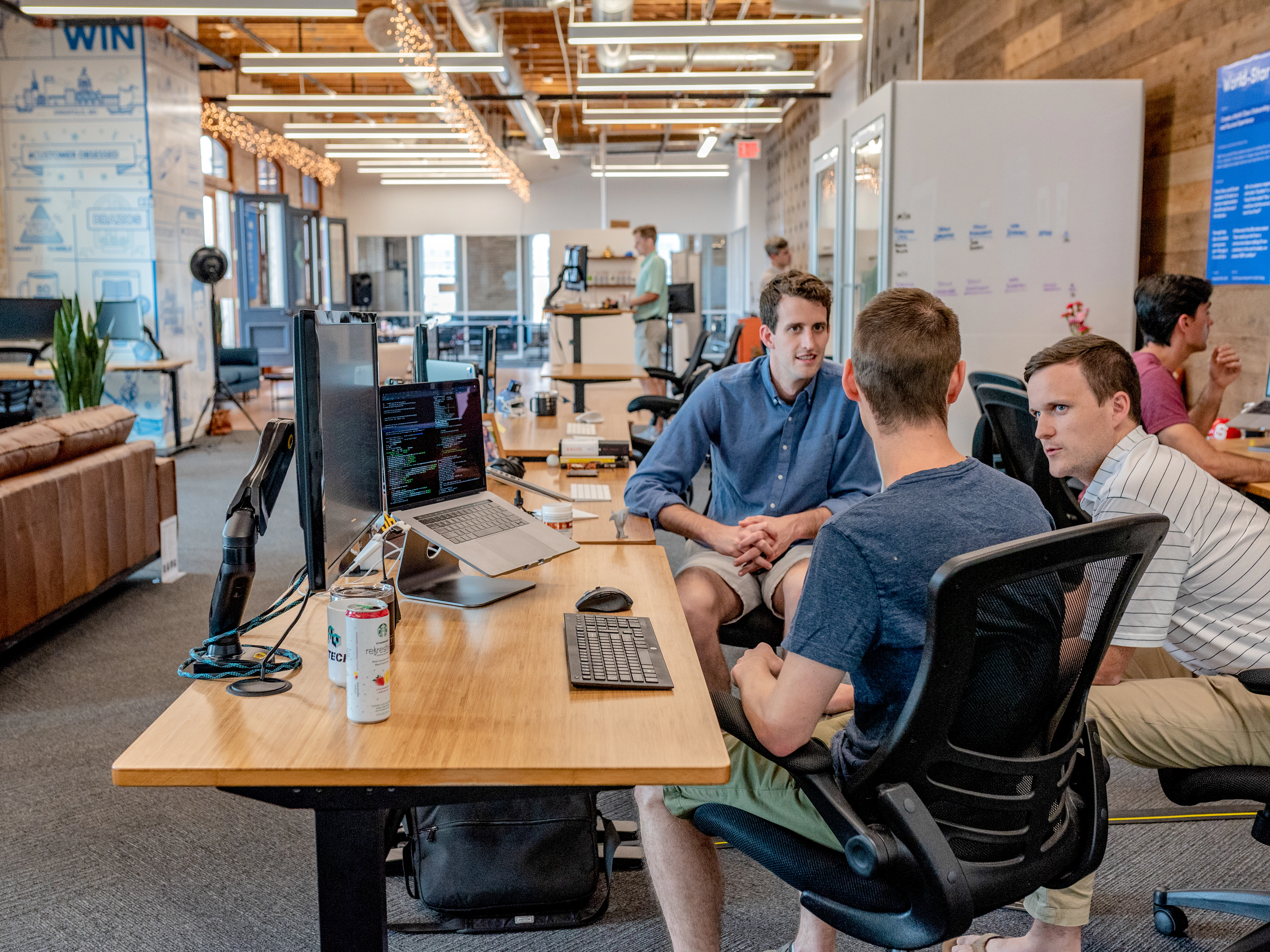
Photo by Austin Distel on Unsplash