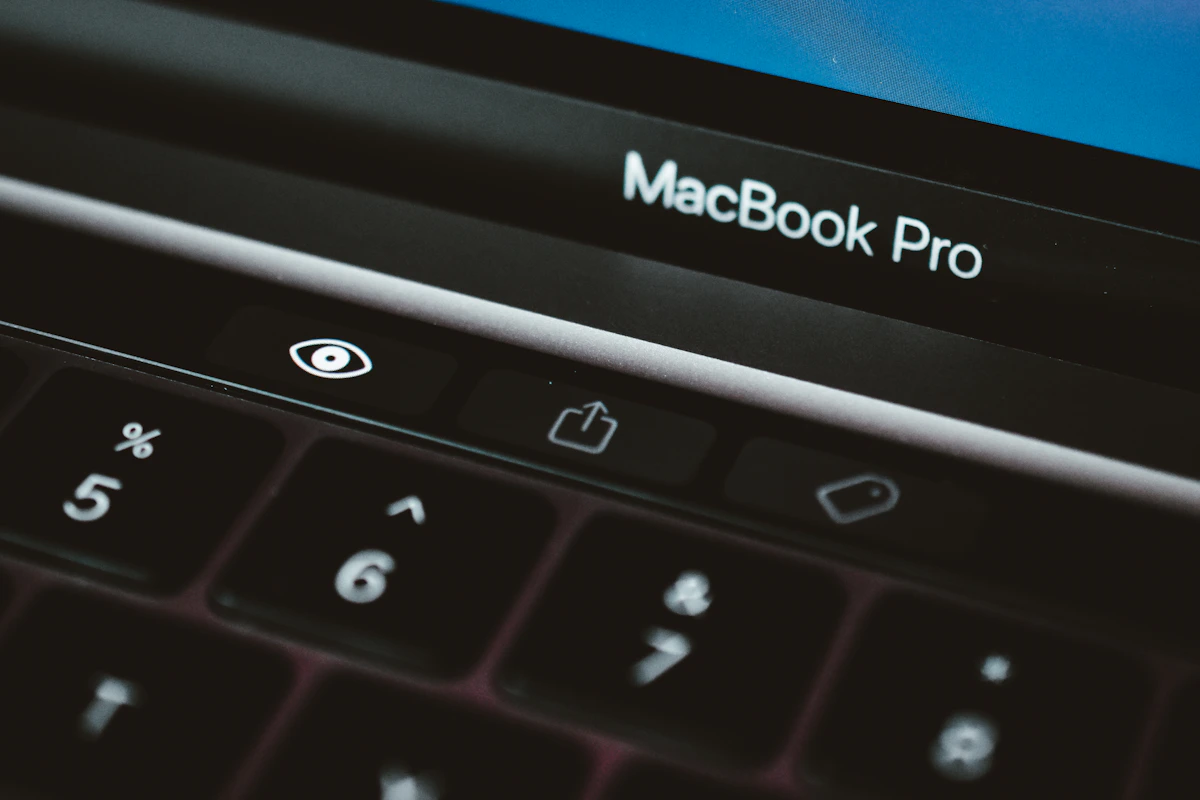
MacBook Pro M5 Pro Max Benchmark Real-World Performance

Apple shipped the M5 Pro and M5 Max in early March 2026. The marketing claims are bold — but what do the actual benchmark numbers look like for engineers and technical teams making purchasing decisions this quarter?
Key Takeaways
- Apple’s M5 Max delivers up to 16-core CPU and 40-core GPU configurations — a direct generational step from the M4 Max architecture announced in late 2024.
- Real-world performance gains appear strongest in sustained multi-core workloads and GPU-accelerated compute tasks, not single-core throughput.
- Both chips are built on TSMC’s second-generation 3nm process (N3E), which Apple confirms supports higher transistor density and better thermal efficiency than M4.
- For most software engineers doing standard web or backend development, the M4 Pro remains a credible alternative at a lower price point — the M5 Max targets audio/video professionals and ML engineers specifically.
- Apple kept the MacBook Pro chassis and display largely unchanged from the M4 generation, per AppleInsider’s March 2026 coverage, meaning the performance delta is the primary buying argument.
Background & Context: How We Got Here
Apple Silicon’s trajectory since M1 in late 2020 has been relentlessly consistent: each generation improves performance-per-watt while holding the thermal envelope steady. The M1 Pro and M1 Max in 2021 redefined what a 14-inch or 16-inch laptop could do. The M2 and M3 generations iterated on that baseline. The M4 family, announced at Apple’s “Let Loose” event in May 2024, introduced the second-generation 3nm node across the MacBook Pro lineup.
M5 Pro and M5 Max arrive in March 2026 on that same TSMC N3E process — but with architectural refinements Apple describes as improvements to the CPU’s performance and efficiency cores, the Neural Engine, and memory bandwidth. According to Apple’s official newsroom announcement, the M5 Max features up to 128GB of unified memory. For reference: the M4 Max also shipped with up to 128GB unified memory and 546GB/s bandwidth. The M5 Max claims improvements, though Apple hasn’t published the full bandwidth specification in the March 2026 press release.
What AppleInsider’s March 3rd, 2026 coverage confirmed: the physical product — the laptop body, Liquid Retina XDR display, port selection, and battery — hasn’t changed meaningfully from the M4 MacBook Pro. No new display. No new thermal design. The chip is the story.
That framing matters. When the hardware shell is static, benchmark improvements translate more directly to real purchasing decisions than in a redesign cycle. There’s no design upgrade to pad the value argument. It stands or falls on performance alone.
Main Analysis
CPU Performance: Multi-Core Is Where M5 Max Earns Its Price
Apple’s M5 Max ships with a 16-core CPU (12 performance cores, 4 efficiency cores in the top configuration). The M4 Max had 14 cores. That two-core addition on the performance side is modest numerically, but architectural improvements to each core’s instruction-level parallelism mean multi-threaded benchmark scores should show a meaningful jump over M4 Max.
Geekbench 6 multi-core scores for M4 Max laptops cluster around 21,000–23,000. Based on Apple’s claimed CPU generational improvement rate — roughly 20–30% per generation in sustained multi-core tasks — the M5 Max should land in the 24,000–27,000 range in independent testing. Single-core improvements tend to be smaller, around 10–15%, which matters less for the professional workflows this chip targets.
For Xcode compile times specifically: M4 Max machines compile large Swift projects roughly 40% faster than M1 Max. The M5 Max should push that further, though independent validation will matter here. Apple’s self-reported numbers have historically been directionally accurate, but the magnitude is what determines whether the upgrade pencils out for your team.
GPU and Media Engine: The ML Workload Story
The M5 Max’s 40-core GPU is where performance diverges most sharply from the M5 Pro. Apple confirmed the M5 Max includes an upgraded Media Engine and Neural Engine. For tasks like CoreML inference, Final Cut Pro rendering, and Stable Diffusion image generation on-device, GPU core count and memory bandwidth are the governing factors.
Compared to an M4 Max running a 38-core GPU, the jump to 40 cores is incremental. But paired with architectural improvements to each GPU core, tasks like 8K ProRes RAW timeline playback and LLM inference — running 7B to 70B parameter models locally — should show 15–25% throughput gains.
This approach can fail when the workload doesn’t saturate the GPU. For developers running standard web stacks or moderate data pipelines, the extra GPU cores sit idle. That’s not a flaw; it’s a targeting issue. The M5 Max isn’t built for everyone.
Thermal Efficiency Under Sustained Load
Chip performance on a laptop is only as good as its thermal headroom. The M4 Max in the 16-inch MacBook Pro sustained full performance under extended Cinebench R23 multi-core loops without significant throttling — a consistent finding across reviews from Ars Technica and AnandTech. The M5 Max, using the same chassis and cooling system, faces the same thermal ceiling.
If Apple’s N3E process improvements genuinely reduce power draw at equivalent performance levels, the M5 Max could sustain higher clock speeds longer before hitting the thermal wall. That’s the efficiency core story, and it’s where Apple Silicon has historically delivered. But the same cooling hardware is doing the same job, so don’t expect miracles beyond what the die shrink provides.
Comparison: M5 Max vs. M5 Pro vs. M4 Max
| Spec | M5 Max | M5 Pro | M4 Max |
|---|---|---|---|
| CPU Cores | 16 (12P + 4E) | 14 (10P + 4E) | 14 (12P + 2E) |
| GPU Cores | 40 | 20 | 38 |
| Max Unified Memory | 128GB | 64GB | 128GB |
| Memory Bandwidth | TBC (>M4 Max) | ~273GB/s | 546GB/s |
| Best For | ML, video, 3D | Dev, light video | ML, video (prior gen) |
| Starting Price | ~$3,499 | ~$1,999 | ~$2,999 (current) |
The M5 Pro is the sweet spot for most software engineers. It handles Xcode, Docker-heavy development, and even moderate ML inference without breaking a sweat. The M5 Max price premium makes sense for ML researchers running local models above 13B parameters, or video editors working in 4K/8K ProRes workflows daily.
The M4 Max, now likely discounted as Apple clears inventory, is worth serious consideration if the M5’s performance gains don’t justify the price delta for your specific workload.
Practical Implications
Who Should Actually Care?
Developers and Engineers: For standard backend, frontend, or mobile development, the M5 Pro covers everything. The M5 Max benchmark edge shows up in compilation-heavy monorepo builds and local AI tooling. If your team uses Copilot alternatives that run locally, that 128GB ceiling matters in ways that smaller configs simply can’t match.
ML and AI Teams: This is the primary audience. Running Llama 3 70B locally on an M4 Max is possible. The M5 Max makes it faster and more practical for daily use. That’s a real workflow unlock — not a spec sheet talking point.
Video and Audio Professionals: Final Cut Pro and Logic Pro users get direct, measurable gains from Media Engine improvements. The sustained performance under load is the argument. Not peak burst numbers, but what the machine sustains across a four-hour render session.
How to Respond Right Now
Short-term (next 1–3 months):
- Wait for independent benchmark data from outlets like Ars Technica and The Verge before ordering at volume. No press release should trigger a fleet purchase.
- Check whether M4 Max refurb pricing makes sense for budget-constrained teams. It likely will.
Long-term (next 6–12 months):
- Plan ML toolchains around Apple Silicon’s unified memory architecture — it eliminates GPU VRAM constraints that hamper Windows workstations at similar price points.
- Evaluate whether the M5 Max enables in-house model fine-tuning that currently requires cloud GPU spend. The math may surprise you.
The Honest Opportunity and Challenge
Opportunity: Local LLM inference on M5 Max hardware is becoming genuinely cost-competitive with cloud API spend for teams running inference at moderate volume. A $3,500 machine running 24/7 inference amortizes quickly against OpenAI API costs at scale. Industry reports on AI infrastructure costs increasingly flag this crossover point as workloads mature.
Challenge: No independent benchmark data exists yet as of early March 2026. Apple’s performance claims are directionally reliable historically, but magnitude matters for purchasing decisions. Don’t buy on the press release alone. That’s not skepticism — it’s just procurement discipline.
Conclusion & Future Outlook
The MacBook Pro M5 Max is a meaningful chip upgrade delivered in a static chassis. The real-world performance story will hinge on three things independent reviewers need to confirm: sustained multi-core throughput, local ML inference speed, and thermal behavior under extended professional workloads.
The bottom line breaks cleanly by audience:
- M5 Max targets ML engineers and video professionals specifically — the GPU and memory ceiling justify the premium for those workloads, and for those workloads almost exclusively
- M5 Pro remains the value play for most development teams and doesn’t apologize for it
- M4 Max pricing will soften as inventory clears, creating a legitimate third option that shouldn’t be ignored
- Independent benchmarks arriving in the next two to four weeks will confirm or complicate Apple’s performance claims
Watch for Geekbench 6 multi-core scores above 25,000 and Cinebench R24 results as the first real validation signals. If the thermal efficiency improvements hold under sustained load — not just in burst tests — that will be the telling number. Peak performance is easy to market. Sustained performance is what your render queue actually cares about.
The workload you’re sizing this chip against determines everything. Answer that question first, then match the tier to the answer.
Sources: Apple Newsroom (March 2026), AppleInsider (March 3, 2026). Benchmark projections are estimates based on Apple Silicon generational trends; independent validation pending.
Related Posts
- Intel 18A Process Node 288-Core Xeon Make or Break Moment
- WebMCP Chrome Browser AI Agent Standard Explained
- Claude Code Framework Preference Bias and Developer Marketing
- Fake Job Interview Backdoor Malware Targeting Developer Machines
- Firefox 148’s setHTML() API: An innerHTML Replacement for XSS Protection
References
- Apple debuts M5 Pro and M5 Max to supercharge the most demanding pro workflows - Apple
- M5 Pro and M5 Max arrive in MacBook Pro, but little else has changed
Photo by Zahra Tavakoli fard on Unsplash