Intel 18A Process Node 288-Core Xeon Make or Break Moment
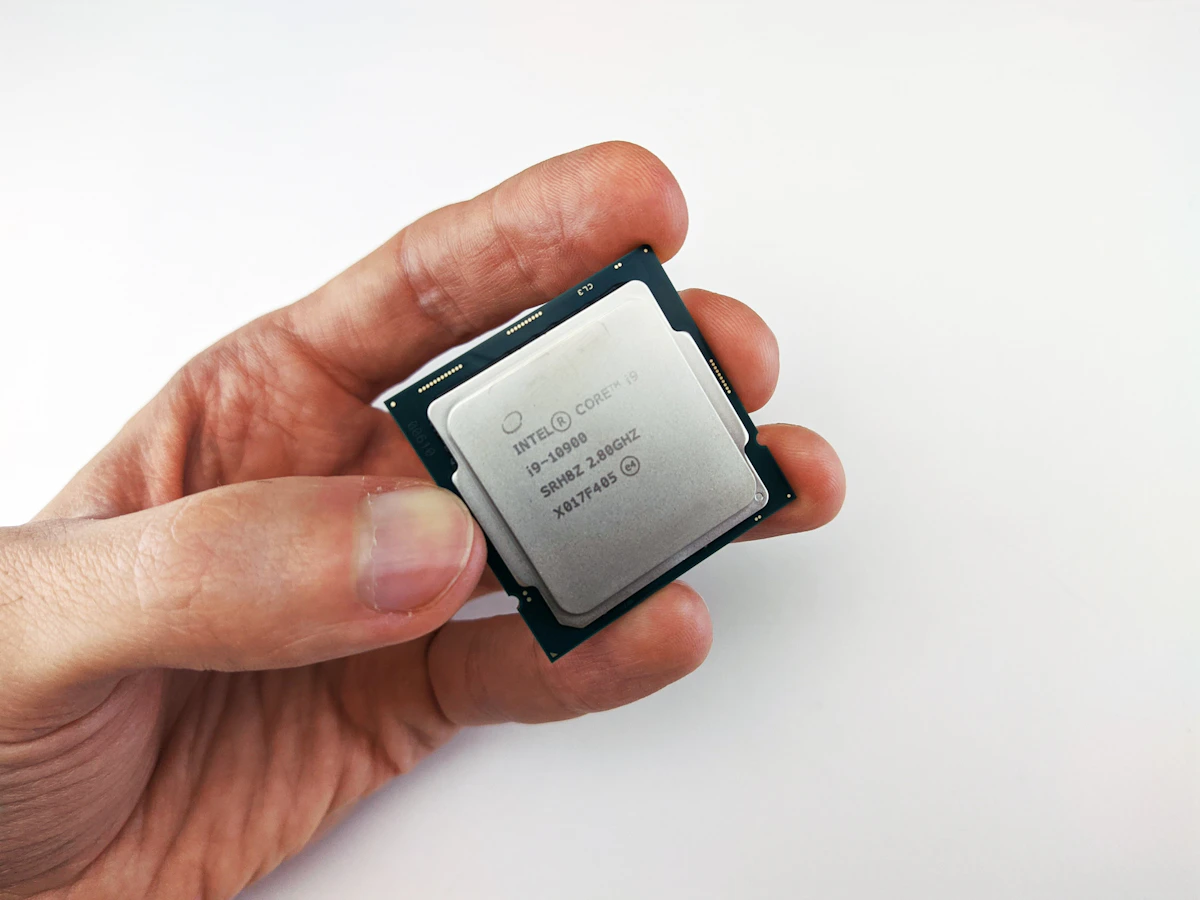
Intel just bet the company on a single silicon node. And the clock is running.
The 18A process node isn’t a roadmap slide anymore. It’s shipping hardware in Q1 2026, and the data center world is watching every wafer come out of fab. After years of embarrassing delays — 10nm slipping, 7nm shelved, Intel 4 failing to leapfrog TSMC equivalents — the company’s engineering credibility needs a win that’s undeniable.
This isn’t routine product cadence. Intel’s foundry ambitions, its server market share, and its ability to compete against TSMC N3 all hinge on whether 18A actually delivers. The 288-core Xeon 6+ built on it is either proof the comeback is real, or the most expensive proof-of-concept in semiconductor history.
Key Takeaways
- Intel’s 18A node ships RibbonFET gate-all-around transistors and PowerVia backside power delivery simultaneously — no other leading-edge node has combined both innovations at production scale.
- The Xeon 6+ 288-core chip pairs 12 channels of DDR5-8000 with Foveros Direct 3D packaging, targeting memory-bandwidth-constrained AI inference and HPC workloads where AMD EPYC Genoa currently dominates.
- Intel Foundry needs 18A to attract external customers like Qualcomm and Microsoft, whose reported test chip engagements depend directly on yield and performance data from this product generation.
- Per Tom’s Hardware (February 2026), the 288-core design is a multi-chip configuration using Foveros Direct die-to-die bonding at 10-micron pitch — not a monolithic die — which reshapes the yield calculus entirely.
- Enterprise procurement teams evaluating server refresh cycles in 2026 should treat 18A benchmark data as decision-critical before locking in AMD EPYC Turin or Arm-based alternatives.
How Intel Got Here
The short version: Intel missed four consecutive process nodes on schedule between 2016 and 2022. TSMC captured Apple, AMD, NVIDIA, and Qualcomm while Intel shipped 14nm+++ longer than anyone in the industry thought possible. The consequences were brutal. AMD EPYC took server market share from roughly 1% in 2017 to an estimated 34% by late 2024, according to Mercury Research data cited by AnandTech.
Pat Gelsinger’s IDM 2.0 strategy, announced in 2021, staked Intel’s recovery on two parallel bets: rebuild internal process leadership AND open Intel Foundry to external customers. Both bets require 18A to work. Intel 4 (used in Meteor Lake) and Intel 3 were transitional nodes — they closed some gap with TSMC but didn’t leapfrog it.
18A changes the equation at the transistor level. RibbonFET — Intel’s gate-all-around implementation — replaces FinFET architecture that’s been in use since 22nm. Gate-all-around wraps gate material on all four sides of the current channel, improving electrostatic control and cutting leakage at smaller geometries. TSMC’s N2 uses a similar nanosheet approach, but Intel’s PowerVia backside power delivery moves power rails to the bottom of the die. That frees up front-side routing resources, improving signal density without requiring further cell shrinkage.
The 288-core Xeon 6+ is the first major production silicon to combine both innovations. Not a clean-room experiment — a data center product with 12-channel DDR5-8000 support and Foveros Direct 3D packaging bonding compute tiles at 10-micron pitch, per Tom’s Hardware’s February 2026 coverage.
What the Specs Actually Mean
RibbonFET and PowerVia shipping together matters because separately, each is incremental. Together, they attack the two biggest scaling bottlenecks at once: transistor leakage and power delivery congestion.
Intel claims 18A delivers performance-per-watt competitive with TSMC N2. Independent validation is still limited, though. TSMC N2 is already shipping in Apple A19 silicon and reportedly in NVIDIA’s next GPU generation — giving it a broader real-world benchmark dataset. Intel 18A’s early 2026 performance data remains mostly Intel-sourced. That’s not automatically disqualifying, but it matters for credibility when enterprises are making multi-year platform decisions.
The 10-micron Foveros Direct bonding pitch is the packaging story. At 10µm, die-to-die interconnect bandwidth rivals what monolithic on-chip buses delivered in previous generations. For a 288-core chip, chiplet design is the only viable path — 288 cores simply won’t fit on a single reticle-limited die. AMD uses a comparable approach with EPYC Turin (Zen 5c density cores), so the architectural choice itself isn’t novel. Intel’s execution at this pitch, though, is new territory for them.
This is also where the risk concentrates. New node, new packaging technology, 288-core multi-chip design — that’s three simultaneous technical variables. Early adopters historically absorb the friction: firmware bugs, thermal management quirks, driver instability. If you’re evaluating Xeon 6+ for production, budget for that.
288 Cores vs. AMD EPYC Turin: The Honest Comparison
| Feature | Intel Xeon 6+ (18A) | AMD EPYC Turin (Zen 5) | Ampere Altra Max |
|---|---|---|---|
| Max Core Count | 288 | 192 | 192 |
| Process Node | Intel 18A | TSMC N3E | TSMC N5 |
| Memory Channels | 12x DDR5-8000 | 12x DDR5-6400 | 8x DDR5-4800 |
| Packaging | Foveros Direct | 3D V-Cache optional | Monolithic |
| TDP Range | ~500W (est.) | 400–500W | 250–350W |
| Market GA | Q1 2026 | Q3 2024 | 2022 |
| Best Workload Fit | AI inference, HPC | General compute, cloud | Cloud-native, density |
Sources: Tom’s Hardware (Feb 2026), AMD EPYC Turin official specs, Ampere Computing product page
AMD EPYC Turin shipped in Q3 2024. Enterprise buyers have 18+ months of real-world data on it. Intel Xeon 6+ at 288 cores is brand new. The core count advantage is real — 288 versus 192 is a 50% increase — but cores alone don’t win workloads.
Memory bandwidth is where Xeon 6+ makes its sharpest argument. Twelve channels of DDR5-8000 versus Turin’s DDR5-6400 delivers meaningfully higher peak bandwidth for in-memory databases, LLM inference at scale, and HPC simulations. If your bottleneck is memory throughput — not raw compute — that differential is worth evaluating seriously.
Arm-based options like Ampere Altra Max and AWS Graviton4 compete on power efficiency, not peak throughput. That’s a different buyer profile entirely.
Intel Foundry’s External Customer Problem
The 288-core Xeon is Intel’s showcase product. The foundry business is the long game.
Qualcomm and Microsoft have both been reported as potential 18A external customers for test chips, per Barron’s in late 2025. Neither has publicly committed to production volumes. The catch-22 is obvious: external customers won’t commit without yield and performance validation. Yield data requires production volume. Production volume requires customers.
The Xeon 6+ is Intel’s way of bootstrapping that loop. Shipping real silicon forces the yield learning curve in a way that test chips don’t. If 18A yields well on the Xeon 6+, Intel has a credible foundry pitch by mid-2026. If yields are soft — if OEM pricing comes in uncompetitive or supply is constrained through H1 — external customer conversations stall another 12 to 18 months.
That’s the signal worth tracking, not Intel’s press releases.
Who Should Care and What to Do About It
Infrastructure engineers and architects: The 288-core count reshapes rack density math for AI inference clusters. Running LLM inference at scale — serving Llama 3, Mistral variants, or similar — the memory bandwidth profile of 12-channel DDR5-8000 matters more than raw core count. Benchmark against your specific model sizes before committing to a platform.
Enterprise procurement teams: Server refresh cycles in 2026 are landing directly inside this transition. AMD EPYC Turin has proven supply and pricing. Intel Xeon 6+ on 18A is new — expect premium pricing early and potentially constrained supply in H1 2026. Factor that into RFP timelines.
Semiconductor industry watchers: Intel’s foundry narrative depends entirely on external adoption of this node. If Qualcomm or Microsoft moves any production to Intel 18A by end of 2026, it signals a genuinely competitive second foundry. If they don’t, Intel Foundry remains an internal cost center with an outsized marketing budget.
Short-term actions (next 1–3 months):
- Request early benchmark access from Intel for your specific workload — AI inference, HPC, or virtualized compute
- Don’t cancel AMD EPYC evaluations; use Turin as the performance baseline
- Track Intel Foundry announcements for external customer confirmations — that’s the real signal
Longer-term positioning (next 6–12 months):
- Build procurement flexibility for H2 2026 when 18A supply should normalize
- If your workloads are memory-bandwidth-limited, prioritize Xeon 6+ memory throughput benchmarks over compute metrics
- Watch Arm competition: AWS Graviton4 and NVIDIA’s Grace Hopper successor are both in this performance tier with different power profiles
The Verdict
The Intel 18A process node and 288-core Xeon aren’t hyperbole. This is genuinely make or break — for Intel’s foundry business model, for its server market recovery, and for its relevance in the AI infrastructure buildout.
The technical spec is credible. RibbonFET plus PowerVia is the most aggressive node Intel has shipped in a decade. Twelve channels of DDR5-8000 and Foveros Direct packaging make the 288-core design viable. But “credible spec” and “proven platform” are different things, and right now Intel has the former.
The real verdict arrives in three forms: independent benchmark data from OEMs like Dell and HPE, yield-implied pricing versus AMD EPYC, and confirmed production commitments from Qualcomm or Microsoft to Intel Foundry. Those signals, expected in H2 2026, are what actually determine whether 18A changes the competitive landscape or becomes a cautionary chapter in Intel’s long recovery story.
If your server refresh timeline is 2026, this benchmark cycle determines your platform for the next three years. The data is coming. Don’t skip the evaluation.
References: Tom’s Hardware (Feb 2026), Mercury Research via AnandTech, AMD EPYC Turin official product page, Ampere Computing Altra Max specs, Barron’s (late 2025) on Intel Foundry customer discussions, WebProNews Intel 18A analysis (2026).
Related Posts
- MacBook Pro M5 Pro Max Benchmark Real-World Performance
- WebMCP Chrome Browser AI Agent Standard Explained
- Claude Code Framework Preference Bias and Developer Marketing
- Fake Job Interview Backdoor Malware Targeting Developer Machines
- Firefox 148’s setHTML() API: An innerHTML Replacement for XSS Protection
References
- Intel’s make-or-break 18A process node debuts for data center with 288-core Xeon 6+ CPU — multi-chip
- Intel’s make-or-break 18A process node debuts for data center with 288-core Xeon | Hacker News
- Intel’s 288-Core Xeon 6 Behemoth: The 18A Chip That Could Decide the Company’s Future in the Data Ce
Photo by Andrey Matveev on Unsplash