Is Midjourney Worth It for Non-Designers in 2026?
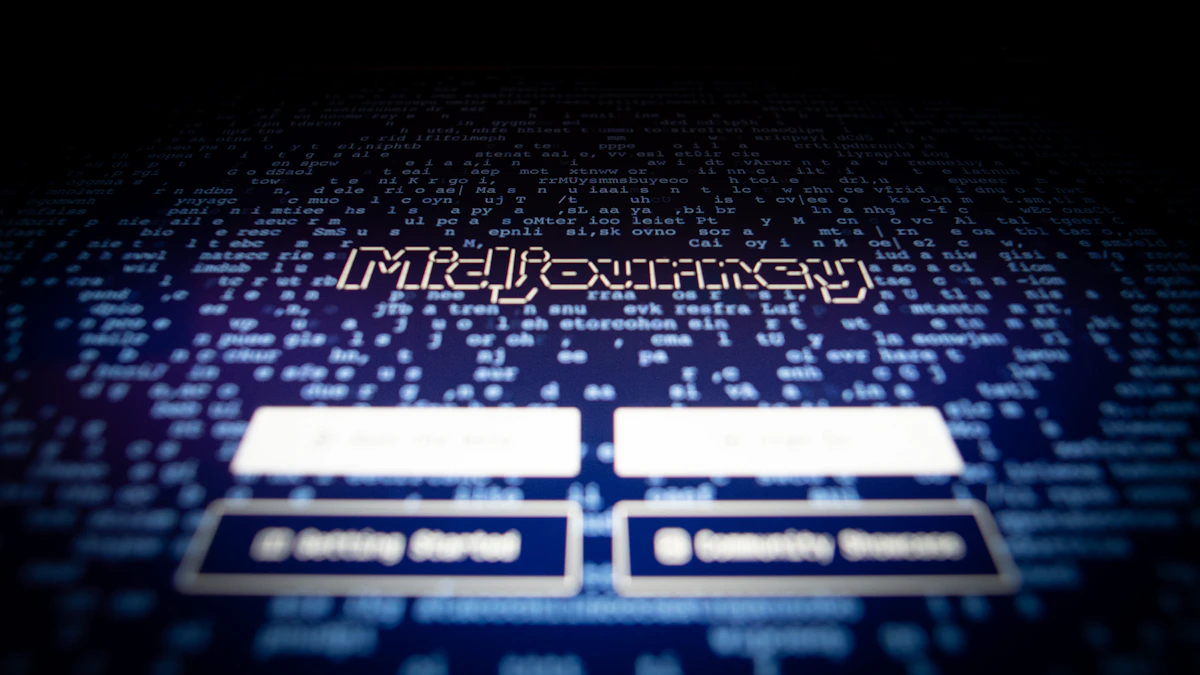
Midjourney just shipped V8.2 as its default model. Images render in under 10 seconds at native 2K HD. And there’s still no free tier. That gap — between genuinely impressive capability and a paywall starting at $10/month — is exactly where the “is it worth it” question gets complicated for non-designers.
The calculus is harder than it looks. You’re not evaluating a creative tool on aesthetic merit alone. You’re asking whether this subscription actually moves the needle on real work outputs — marketing assets, social content, product mockups, pitch decks — faster than alternatives that cost less or nothing.
The short answer: it depends heavily on your volume and how much you value aesthetic control. The longer answer requires looking at what Midjourney actually delivers now, who it’s up against, and where the hidden costs live.
This analysis covers:
- What V8.2 actually changes for non-technical users
- How Midjourney stacks up against GPT Image 2, Canva AI, and Adobe Firefly
- Where the real pricing friction shows up (it’s not the $10 tier)
- Which user profiles get genuine value and which ones don’t
In brief: Midjourney V8.2 delivers the highest aesthetic image quality of any AI generator available in September 2026, but free and cheaper competitors have closed the gap enough that it’s no longer the obvious default for non-designers. Whether it’s worth paying for depends entirely on output volume and whether aesthetic quality is a differentiating factor in your work.
- Non-designers generating under 50 images/month should seriously evaluate GPT Image 2 at $20/month before committing to Midjourney.
- Commercial users need the $60/month Pro tier for Stealth Mode — tripling the entry cost relative to the Basic plan’s advertised $10 price.
- For teams combining tools, Midjourney pairs well with Canva AI 2.0 for routine work and adds specific value for hero images and premium visuals.
How the AI Image Market Got Crowded Fast
Twelve months ago, Midjourney had a defensible moat. The aesthetic quality gap between its outputs and everything else was visible at a glance. That gap has narrowed substantially through 2025–2026.
The timeline matters. Midjourney launched V8 Alpha in March 2026, made V8.1 the default on June 11, then shipped V8.2 on July 24, 2026, according to AIWorthIt’s 2026 review. Three major model updates in roughly four months. The speed improvements alone are significant: V8.2 generates images approximately 5× faster than V7, dropping from 30–60 seconds to under 10 seconds per image.
Competitors didn’t stand still. GPT Image 2 launched with ChatGPT integration and quickly topped public Arena image leaderboards on text rendering and prompt accuracy. Google rolled out Nano Banana 2 as a free option — though it shut down June 24, 2026. Ideogram 4.0 launched June 3, 2026 and took the lead specifically on text-in-image accuracy. Adobe Firefly kept its commercial licensing advantage. Canva AI 2.0 kept its workflow advantage.
The result: Midjourney is no longer competing in an empty field. Every dollar of its subscription now competes directly against alternatives with real capabilities.
What V8.2 Actually Delivers
The technical jump in V8.2 is real. Native 2K HD output without a separate upscale step matters for anyone producing assets that end up in print or large-format display. According to AIWorthIt, V8.1 HD mode is already 3× faster and 3× cheaper than the previous HD workflow, and standard mode is 50% faster at 25% lower GPU cost. V8.2 pushes that further.
Improved anatomical accuracy matters for non-designers. One of the most common failure modes in early Midjourney outputs — distorted hands, inconsistent face structures — has improved substantially. Prompt comprehension is better, meaning fewer iterations to get usable output.
The personalization feature is underrated. It trains on your image ratings over time and starts producing outputs that match your aesthetic preferences rather than generic AI defaults. For non-designers who struggle to articulate what they want through prompts, this is genuinely useful. The model adapts to your taste rather than requiring you to master prompt engineering first.
Text rendering, though, remains a real weakness. Midjourney fails reliably beyond approximately three words of in-image text, trailing both GPT Image 2 and Ideogram 4.0 by a significant margin, according to Techpresso’s price breakdown. For non-designers creating social graphics or marketing assets that require readable copy, that’s a meaningful limitation — not a minor inconvenience.
The Real Pricing Problem
The $10/month Basic plan looks accessible. For most real workflows, it isn’t.
Basic gives you roughly 200 generations per month with no Relax mode, meaning every generation burns fast GPU hours. Run out and you stop until next month or buy more. Standard at $30/month adds unlimited Relax mode — slower generations, no GPU hour cap — which is where most non-designers should actually start if they’re generating assets regularly.
The commercial catch is bigger. Stealth Mode — which keeps your images private and off Midjourney’s public gallery — requires the Pro tier at $60/month. For anyone doing client work or generating proprietary assets, that’s not optional. According to AIWorthIt, companies earning over $1M annually must use Pro or Mega plans by terms of service. The effective entry price for serious commercial use is $60/month, not $10.
Midjourney vs. Key Alternatives for Non-Designers
| Feature | Midjourney Standard | GPT Image 2 | Canva AI 2.0 | Adobe Firefly |
|---|---|---|---|---|
| Monthly Cost | $30 | $20 (ChatGPT Plus) | $13 | $9.99 |
| Free Tier | No | Limited | Yes | Limited |
| Aesthetic Quality | Highest | High | Moderate | High |
| Text in Images | Weak (3 words) | Strong | Moderate | Moderate |
| Commercial Safety | Terms-dependent | Terms-dependent | Terms-dependent | Strongest (licensed stock) |
| Workflow Integration | Standalone | ChatGPT ecosystem | Full design suite | Adobe CC |
| Privacy (no watermark) | Pro plan only ($60) | Standard | Standard | Standard |
| Learning Curve | Moderate | Low | Lowest | Moderate |
| Best For | Premium hero images | Accurate text prompts | Routine marketing assets | Commercial-safe creative |
Sources: Techpresso, AIWorthIt, Grafisify
Midjourney wins on aesthetic output quality. It loses on price efficiency, workflow breadth, text accuracy, and — critically — on privacy unless you’re paying $60/month.
For non-designers handling routine marketing work, Canva AI 2.0’s Magic Design feature reportedly handles approximately 80% of standard marketing needs at $13/month, according to Grafisify’s three-month evaluation of 15 tools. That’s a hard number to argue against. Adobe Firefly’s commercially-licensed training data removes a legal headache that Midjourney’s terms of service doesn’t fully resolve at lower plan tiers.
GPT Image 2 is the sharpest direct competitor. Cheaper than Midjourney Standard, better on text rendering and prompt accuracy, and already inside a workflow many professionals use daily. The one area where Midjourney pulls ahead is aesthetic judgment — that intangible quality where outputs feel more intentional and stylistically cohesive. Whether that difference justifies the price gap is the actual question non-designers need to answer for themselves.
Three Workflows, Three Different Answers
For marketing and content teams producing at volume: Midjourney Standard at $30/month makes sense if hero image quality is a differentiator — campaign visuals, landing page imagery, social ads where aesthetics affect conversion. Pair it with Canva AI 2.0 for templated day-to-day assets. Don’t use Midjourney for text-heavy graphics. That combination covers most bases without over-indexing on a single tool.
For freelancers and consultants doing client work: The math changes fast. Stealth Mode at $60/month is effectively required for professional deliverables — you can’t let client images appear in Midjourney’s public gallery without explicit consent. At $60/month, the comparison against GPT Image 2 ($20) or Adobe Firefly ($9.99) becomes much harder to justify unless clients specifically value the Midjourney aesthetic and you’re generating enough volume to need 30 fast GPU hours monthly.
For individuals experimenting or producing occasional assets: Midjourney probably isn’t worth it in 2026. GPT Image 2 within ChatGPT Plus gives you image generation, strong text rendering, and workflow integration at $20/month inside a tool you’re likely already using. Canva AI 2.0 has a functional free tier. Midjourney has no trial and no free tier — the commitment starts immediately, with no way to test whether the quality difference matters for your specific use case before paying.
What to watch: Midjourney has been building toward a video model alongside its image tools. If that ships with quality comparable to Sora or Runway, the value proposition for creative professionals shifts significantly. Worth tracking, too: whether any competitor closes the aesthetic quality gap enough to make the Midjourney premium unjustifiable even for high-volume users.
The Bottom Line
Answering whether Midjourney is worth it for non-designers in 2026 comes down to four factors:
- Output volume: Under 50 images/month, look at GPT Image 2 first
- Commercial requirements: Client work essentially means $60/month, not $10
- Text in images: Midjourney fails here — use Ideogram 4.0 or GPT Image 2
- Aesthetic quality ceiling: If you need the best-looking images available, nothing else currently matches it
Over the next 6–12 months, expect the aesthetic quality gap to narrow further. Google, Adobe, and OpenAI are all pushing model updates at high velocity. The personalization feature and a potential video model could extend Midjourney’s lead — but only if the video output reaches the same quality bar as its images.
The clearest move: run one month with GPT Image 2 or Canva AI 2.0 against your actual workflows before committing to Midjourney. The premium is real. Whether it’s justified depends entirely on whether aesthetic quality shows up in your outputs in ways that matter to the people receiving them.
If it does, Midjourney still earns its subscription. If it doesn’t, you’re paying for something you can’t measure.
Key Takeaways
- Midjourney V8.2 leads on aesthetic quality, but competitors have meaningfully closed the gap
- The real entry price for commercial use is $60/month — not the $10 advertised on the Basic plan
- Text rendering beyond three words is unreliable; use GPT Image 2 or Ideogram 4.0 for copy-heavy assets
- Non-designers generating under 50 images/month should trial GPT Image 2 first
- The personalization feature is Midjourney’s most underrated advantage for non-designers who can’t master prompt engineering
- No free tier and no trial means the cost commitment is immediate — validate your use case before paying
References
- Is Midjourney Worth It in 2026? An Honest Price Breakdown
- Midjourney Review 2026: Is It Still the Best AI Image Generator?
- Midjourney Review 2026: Is It Worth It? An Honest Assessment
Photo by Jonathan Kemper on Unsplash