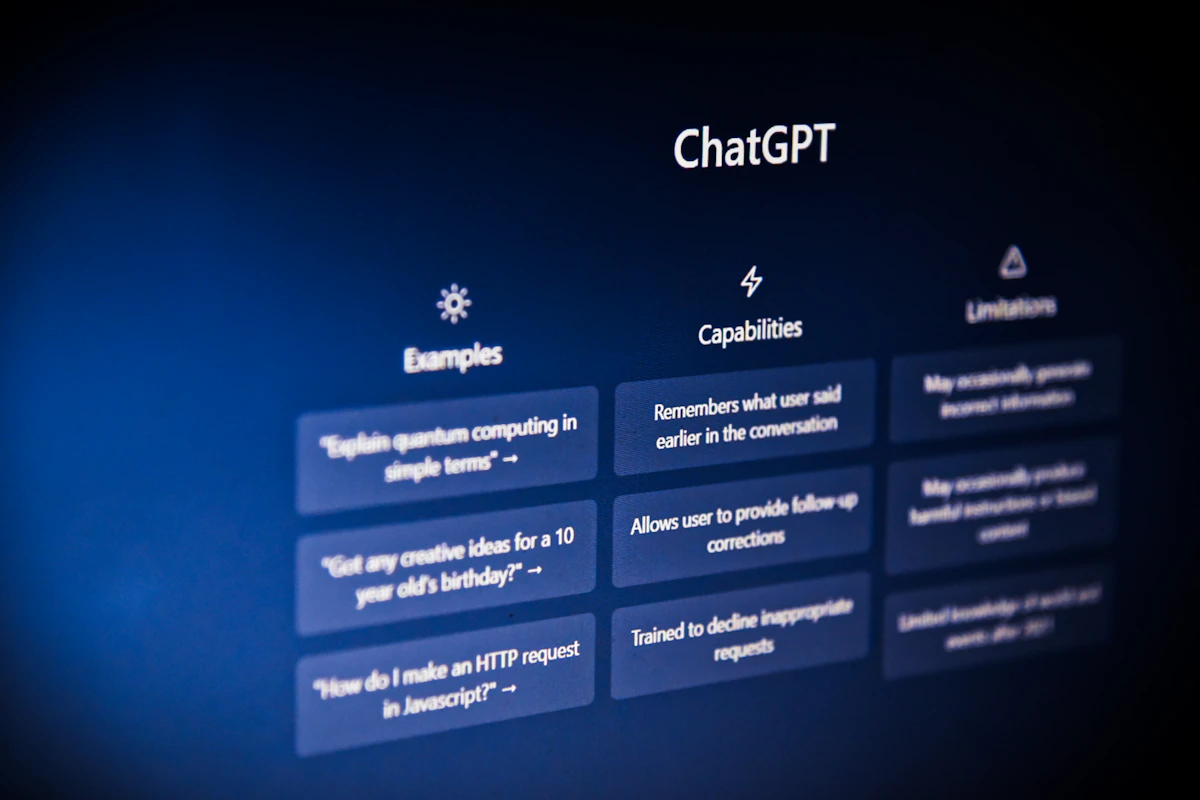
ChatGPT image generator getting worse: real or imagined?
Something shifted on October 29, 2026. Paying ChatGPT subscribers started noticing their image generation workflows breaking down — not gradually, but suddenly. Requests for 10 images started returning 1. Prompts that previously worked cleanly got ignored. What began as Reddit speculation about whether the ChatGPT image generator was degrading became a documented pattern worth examining seriously.
This matters because image generation isn’t a novelty feature anymore. Designers, marketing teams, and indie developers have built production workflows around ChatGPT’s image tools. When quality degrades without explanation, that’s a reliability problem — not just an annoyance.
The degradation appears real, not imagined, based on specific behavioral changes that point to a backend event rather than user error or placebo effect. But the evidence has clear limits, and the picture is incomplete.
What follows: what the community is actually reporting, why sudden date-specific degradation signals a deployment event, how ChatGPT’s image tools compare to alternatives under these conditions, and what paying subscribers should do right now.
Key Takeaways
- According to the OpenAI Developer Community forum, image generation quality degraded sharply starting October 29, 2026 — output volume dropped from 10 images to 1 per request.
- The date-specific onset strongly suggests a backend deployment or model change triggered the degradation, not gradual drift.
- Prompt adherence failures and regeneration loops — where modified requests return identical images — represent a qualitatively different category of failure than simple quality reduction.
- As of November 1, 2026, no official OpenAI response or technical explanation had been published, leaving paying subscribers without a resolution timeline.
- Competing image generation tools haven’t reported equivalent issues in the same window, making this a ChatGPT-specific event rather than an industry-wide signal.
What Changed and When
ChatGPT’s image generation capability went through several iterations before becoming a credible part of paid subscription value. The platform moved from early DALL-E integrations toward tighter native image tools, with improvements shipping incrementally through 2025 and into 2026. By mid-2026, professionals were using it in real workflows — not just as a demo feature.
The Reddit community noted the arrival of Images 2.6 as a significant update, signaling OpenAI’s continued investment in the feature set. That context matters. When a platform actively develops and updates a tool, backend changes happen frequently. Most ship cleanly. Some don’t.
According to the OpenAI Developer Community forum, a paying subscriber reported a cluster of specific failures beginning October 29, 2026:
- Requests for 10 images consistently returning only 1
- Generated images described as “subpar” versus previous outputs
- Explicit instructions to preserve original image details being ignored
- Regeneration requests looping back identical, unchanged images
The forum post went up November 1, meaning these issues persisted for at least three days before the user escalated publicly. That’s not someone filing a bug report at the first sign of trouble.
The Date-Specificity Problem
Random quality variance doesn’t start on a Tuesday. Gradual model drift doesn’t produce a clean cutoff date that multiple users can independently identify.
October 29 as a consistent failure onset is the most diagnostic detail in the report. When users can say “it worked fine on the 28th and broke on the 29th,” that’s a deployment fingerprint. Backend changes — model swaps, infrastructure updates, rate limiting adjustments, safety filter tuning — produce exactly this pattern. The behavior shifts abruptly because something changed abruptly.
That rules out the most common dismissals: confirmation bias, changing prompt quality, or platform variability. Those explanations predict gradual degradation or inconsistent timing. They don’t explain synchronized failure across a specific date.
Failure Mode Taxonomy
Not all degradation looks the same. The specific failure types reported here fall into distinct categories, and that matters for diagnosing root cause.
Output volume reduction (10 → 1 image) suggests a quota or rate-limiting change, possibly tied to backend cost controls or infrastructure capacity. This is a policy-level change, not a model quality issue.
Prompt adherence failures point toward a different problem — either a model update that shifted instruction-following behavior, or a safety filter adjustment intercepting legitimate creative instructions.
Regeneration loops (modified requests returning identical images) are the strangest symptom. The system either isn’t processing the delta between requests or is caching outputs inappropriately. Neither interpretation is benign.
Three separate failure modes appearing simultaneously, on the same date, is a strong signal that multiple systems were touched in a single deployment.
Comparing ChatGPT’s Image Tools to Current Alternatives
The degradation question becomes sharper when you benchmark against alternatives available in November 2026.
| Criteria | ChatGPT Image Gen (post-Oct 29) | Midjourney v7 | Adobe Firefly 3 | Stable Diffusion (self-hosted) |
|---|---|---|---|---|
| Prompt adherence | Degraded (reported) | Strong | Strong | Variable by model |
| Output volume control | Broken for some users | Configurable | Configurable | Unlimited |
| Workflow integration | Native in ChatGPT | Discord/API | Adobe ecosystem | Custom pipeline |
| Official SLA | None public | None public | Enterprise tiers | N/A |
| Incident transparency | No response as of Nov 1 | Typically posts status | Status page exists | Community-driven |
| Cost for heavy use | Included in Plus/Pro | Subscription tiers | Credit-based | Infrastructure cost |
The comparison surfaces a structural problem. ChatGPT’s image generation has no public status page and no documented SLA. When things break, users file community forum posts and wait. Midjourney and Adobe both have clearer escalation paths for production users.
Self-hosted Stable Diffusion avoids this entirely — but trades convenience and polish for infrastructure overhead. That tradeoff only makes sense for teams with engineering capacity to maintain the pipeline.
This isn’t a knock on ChatGPT’s image quality when it works. The issue is what happens when it doesn’t, and the current answer is: not much.
Practical Implications: Scenarios for Affected Users
Scenario 1: You’re a solo creator with a ChatGPT Plus subscription. The output volume reduction alone may have cut your effective image throughput by 90%. Short-term fix: use Midjourney’s web interface as a fallback for high-volume generation while monitoring OpenAI’s status channels. Don’t rebuild your entire workflow around the assumption that this is permanent — but don’t wait passively either.
Scenario 2: You’re on a team that built internal tooling on the ChatGPT API for image generation. The lack of an official incident response as of November 1 is the real problem. No timeline, no root cause, no workaround from OpenAI. Add a circuit breaker to your integration that flags degraded responses — single image returned when multiple were requested — and routes to a fallback provider. Treat this as an architecture lesson about single-provider dependency.
Scenario 3: You’re evaluating ChatGPT’s image tools for a new project. Hold off. Starting a new integration during an unacknowledged incident, with no response timeline, adds unnecessary risk. Revisit in four to six weeks once the situation resolves — or doesn’t. The resolution itself will tell you something useful about how OpenAI handles production incidents for this feature.
What to watch: OpenAI’s official changelog and the Developer Community forum thread for any acknowledgment. If no response appears within 10 days of the October 29 onset, that tells you something important about support responsiveness for image generation specifically.
Conclusion
The question of whether the ChatGPT image generator got worse has a cleaner answer than the limited public evidence might suggest: real, specific, and carrying the signature of a deployment event rather than user perception.
The date-specific failure onset points to a backend change, not drift. Three simultaneous failure modes suggest multiple systems were touched in a single deployment. No official OpenAI response as of November 1 leaves paying users without a resolution path. And competitor tools haven’t shown equivalent failures in the same window.
Looking ahead, OpenAI will likely acknowledge and address this within two to four weeks — silent degradations on paid tiers tend to generate enough pressure to force a response. The larger question is whether this incident prompts OpenAI to publish a proper status page for image generation, the way they do for API services. Right now, that gap is a real liability for anyone building around these tools.
The practical takeaway isn’t complicated: treat single-provider image generation pipelines as fragile by design. Whether the ChatGPT image generator recovers quickly or drags on, this week proved the architecture assumption was wrong.
What’s your current fallback when image generation goes down? That’s the question worth answering before the next incident hits.
References
- ChatGPT Image Generation Has Gotten Significantly Worse Since October 29th — Is Anyone Else Experien
- r/ChatGPT on Reddit: Introducing Images 2.6
Photo by Levart_Photographer on Unsplash