Are AI Chatbots Storing Your Personal Conversations in 2026

Two years ago, AI chatbot privacy was a theoretical concern. A conversation starter for security conferences. By mid-2026, it’s documented operational risk with federal case law attached — and most professionals are still operating under assumptions that courts have already invalidated.
There’s a federal court order sitting on OpenAI’s servers right now, preserving deleted ChatGPT conversations you thought were gone. That’s not speculation. That’s a May 2025 preservation order documented in NYT v. OpenAI, which ultimately transferred 20 million de-identified conversations to plaintiffs. So yes, are AI chatbots storing your personal conversations in 2026? More than you realize, longer than you’d expect, and with fewer legal protections than almost any other communication medium you use.
Key Takeaways
- U.S. federal courts established in United States v. Heppner (April 2026) that AI chatbot conversations carry zero legal privilege — they’re treated as third-party commercial records, subpoenable on demand.
- According to Reso Blog, 68% of organizations reported AI-related data leaks in 2026, yet only 23% had dedicated AI data security policies.
- ChatGPT retains deleted chats for 30 days; Gemini retains flagged content up to 3 years; Anthropic retains flagged content up to 7 years — and litigation holds make all of these timelines indefinite.
- Consumer and enterprise tiers operate under fundamentally different data contracts, a gap most individual professionals haven’t closed.
How We Got Here: The Privacy Gap That Widened Fast
The Samsung incident in April 2023 was the first major wake-up call. Engineers pasted proprietary source code into ChatGPT’s consumer tier during debugging sessions. Samsung subsequently banned generative AI company-wide — not because of malicious actors, but because default data handling on consumer accounts meant that content could feed model training. The lesson should’ve spread industry-wide. It didn’t.
What accelerated concern was the legal system catching up. The May 2025 preservation order in NYT v. OpenAI demonstrated that courts can override standard deletion timelines entirely. OpenAI was compelled to retain user chat logs — including deleted ones — for five months. Twenty million conversations moved to opposing counsel. That’s not a breach. That’s legal process working exactly as designed.
Then in March 2026, according to Reso Blog, a Meta AI agent exposed sensitive user and corporate data to multiple engineers for two hours — a reminder that the attack surface isn’t just external. A major unnamed AI provider suffered a separate breach in early 2026 exposing months of health and financial conversations, as cited by Ghost Shield.
The EU AI Act, now active in 2026, introduced mandatory transparency requirements around data usage. Regulatory pressure from one direction. Hardening case law from another. And most organizations caught somewhere in between.
What’s Actually Being Collected
Most people think “conversation data.” The actual collection scope is broader.
According to Reso Blog, major AI chatbots collect uploaded files (PDFs, spreadsheets, screenshots), device metadata, IP addresses, location data, and voice recordings from speech-enabled interfaces — alongside conversation text. That IP address logging matters because it enables longitudinal user profiling even without account information. Use a chatbot from your home network repeatedly, and the metadata builds a coherent profile regardless of whether your chats are nominally “anonymized.”
The anonymization problem deserves its own paragraph. De-identification is the privacy mechanism providers point to when sharing data with researchers or advertisers. But Ghost Shield notes that testing found data logs containing sufficient identifying detail to make users traceable despite nominal anonymization. Names survive. Account numbers survive. Code snippets referencing specific internal systems survive. Anonymization of conversational data is, as Reso Blog puts it, “notoriously leaky.”
The Deletion Misconception
Deleting your chat history doesn’t do what you think it does.
Across the three major providers, deletion removes content from the user-visible interface. Backend retention is a different matter entirely. According to Sigma Browser, ChatGPT retains deleted data for 30 days, Claude for 30 days, and Gemini for 72 hours — but flagged content can be retained for 7 years (Anthropic) or 3 years (Google). Under litigation holds, all of those timelines become indefinite.
OpenAI’s August 2025 policy update added another layer: the company can now proactively disclose conversation content to law enforcement when violent threats are detected, without a court order. A unilateral policy change that shifted the privacy calculus for millions of users overnight.
The Legal Exposure No One Planned For
United States v. Heppner (S.D.N.Y., April 2026) is the case professionals need to know. According to Sigma Browser, this was the first federal ruling explicitly denying AI conversations any legal privilege. The court established that commercial AI platforms are third parties — not privileged relationships. Attorney-client privilege doesn’t extend here. Neither does therapist-patient confidentiality.
OpenAI’s own data indicates roughly half of ChatGPT messages are advice requests and over 10% are personal reflections. People are using these tools like confidential advisors. Courts have now confirmed they aren’t.
The 2025 Pacific Palisades arson prosecution made this concrete. ChatGPT conversation history — including generated images and typed queries — was introduced as evidence of motive. This isn’t theoretical exposure. It’s evidentiary record.
Provider Comparison: Consumer vs. Enterprise Reality
| Criteria | ChatGPT (Consumer) | Gemini (Consumer) | Claude (Consumer) | Enterprise Tiers (All Three) |
|---|---|---|---|---|
| Training on chats | Yes, unless opted out | Yes | No (default off) | No |
| Human review | Yes | Yes | Limited | No |
| Retention (deleted) | 30 days | 72 hours | 30 days | Zero retention options available |
| Flagged content retention | Varies | Up to 3 years | Up to 7 years | Contract-defined |
| Legal hold exposure | Yes | Yes | Yes | Yes (but scoped) |
| SOC 2 Type II | Not on consumer tier | Not on consumer tier | Not on consumer tier | Standard |
The enterprise tier gap is stark. All three major providers offer zero data retention options and no model training on business data — but only at Team or Enterprise contract levels. Individual contributors and small teams using consumer accounts get none of those protections. That’s where most of the exposure lives.
This approach can fail in predictable ways. Even organizations that upgrade to enterprise tiers sometimes maintain shadow consumer accounts — individuals using personal ChatGPT logins for work tasks because the enterprise version “feels slower” or requires additional login steps. The contract protection only works if it covers actual usage patterns.
Three Scenarios That Actually Matter
Scenario 1: The professional using consumer ChatGPT for work tasks. Pasting client data, internal API structures, or personnel information into a consumer-tier account means that content may train future models and is subject to subpoena. The fix is straightforward: either upgrade to a Team or Enterprise account with confirmed zero-retention contracts, or establish a firm policy against inputting identifiable business data into any consumer AI interface. Both. Ideally both.
Scenario 2: The organization without an AI data governance policy. Only 23% of organizations had dedicated AI data security policies as of 2026, according to Reso Blog. The minimum viable policy requires five components: an approved tools list, data classification rules, tier discipline with SOC 2 Type II verification, scenario-based employee training, and an AI-specific incident response procedure separate from standard breach protocols. The Samsung scenario — proprietary code pasted into a consumer chatbot — is entirely preventable with a documented approved-tools list. It’s not a sophisticated fix. It’s a documented one.
Scenario 3: The individual with legitimate privacy concerns. Ghost Shield recommends five concrete steps: disable chat history storage, use a VPN to prevent IP-based profiling, minimize personal detail disclosure, opt out of third-party data sharing, and enable auto-deletion. Claude’s default-off training setting makes it the lowest-friction consumer option right now. That matters for individuals who can’t upgrade to enterprise tiers.
One thing worth watching: the EU AI Act’s transparency requirements will pressure providers to publish clearer data retention disclosures through late 2026. On-device, zero-storage chatbot products are emerging but remain limited. That segment will matter — enterprise adoption will be the leading indicator.
The Forward Look
The picture is now legally settled and empirically documented. Courts treat these conversations as commercial records. Retention extends far beyond what users expect. Consumer and enterprise tiers are operating under fundamentally different rules.
Four findings that stand:
- Federal case law denies AI conversations any legal privilege
- Deletion doesn’t equal removal — flagged content can persist for years
- 68% of organizations reported AI data leaks, yet most lack governance policies
- The enterprise tier gap is the highest-leverage risk most organizations haven’t closed
In the next 6-12 months, expect two developments: more explicit regulatory disclosures required under EU AI Act enforcement, and the first major civil lawsuit citing AI conversation content as primary evidence. The latter will shift enterprise procurement conversations faster than any policy brief.
The concrete action isn’t complicated. Audit which tier your team is actually using. Consumer accounts carry enterprise-level risk with none of the enterprise-level protections. That’s a contract gap, not a technology problem — and it’s fixable today.
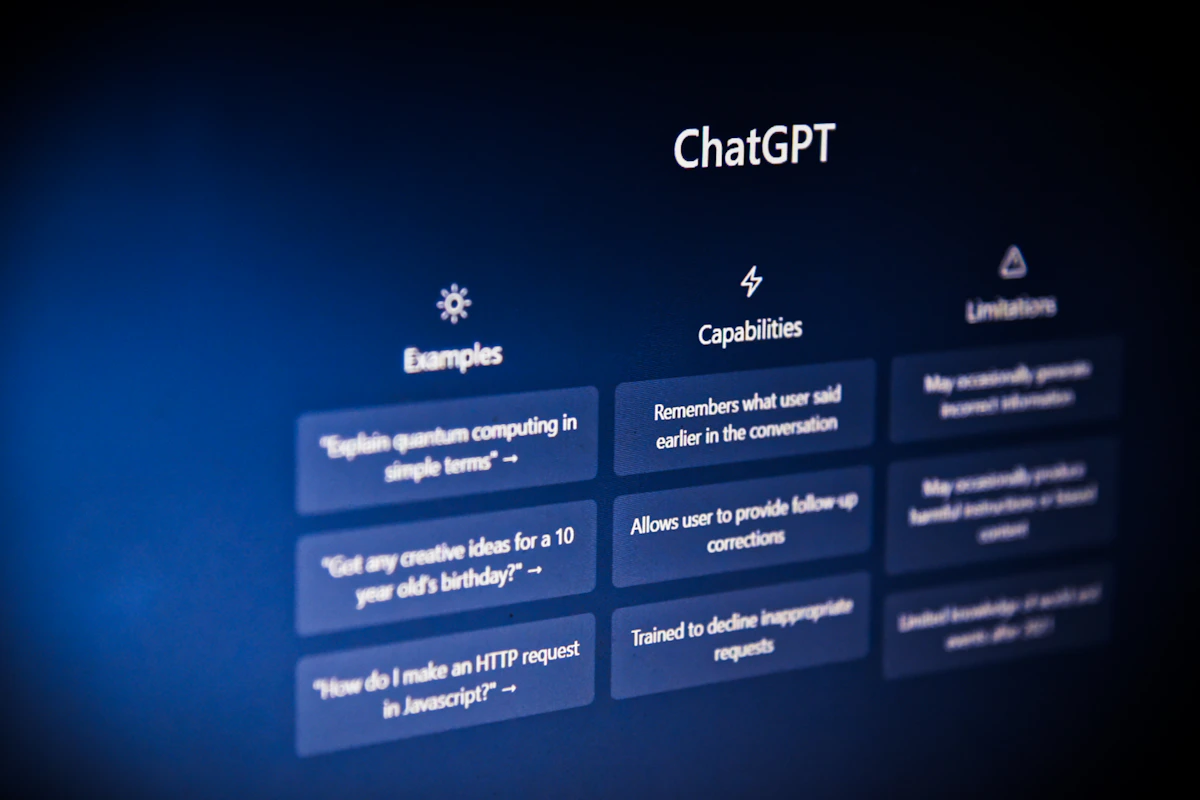
Photo by Steve A Johnson on Unsplash