ChatGPT 1 Billion Users Milestone What It Means for Everyday Users
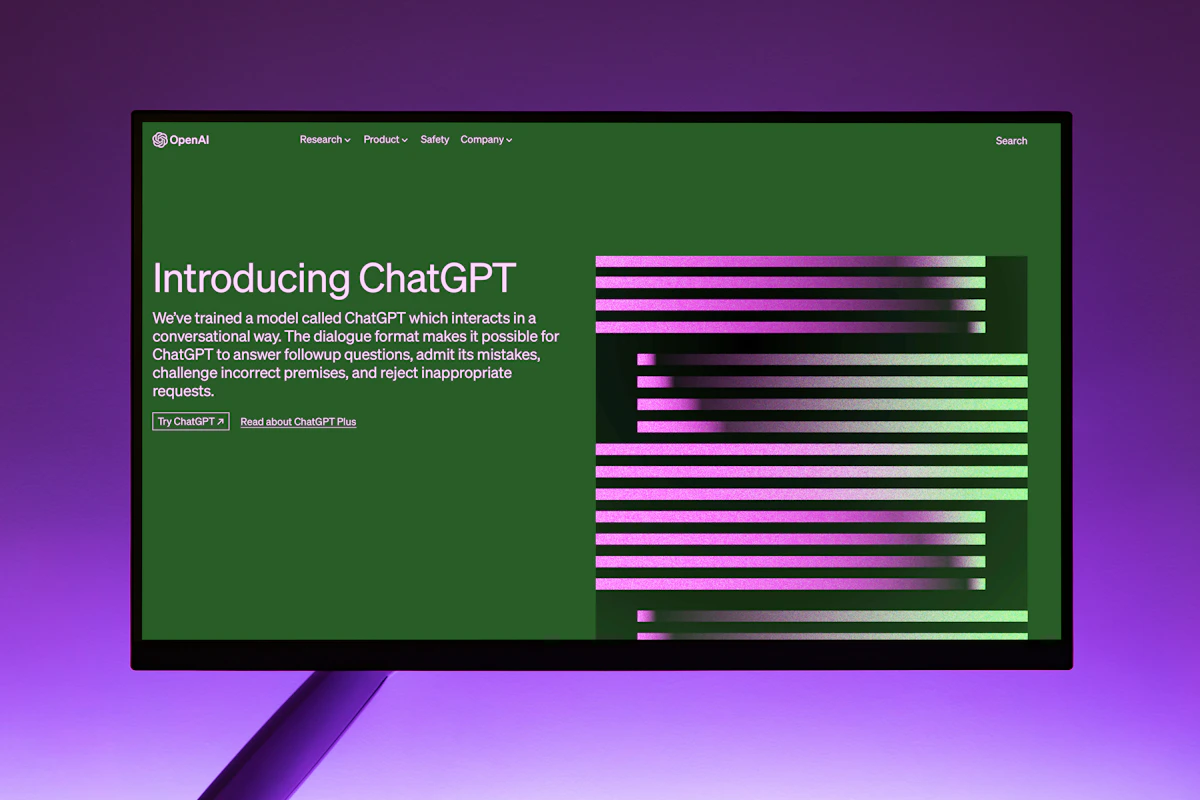
One billion. That’s not a projection or a marketing target — that’s how many people opened ChatGPT in May 2026, roughly three years after OpenAI launched in November 2022.
No app has ever crossed that threshold faster. Not Google Maps. Not TikTok. Not Instagram or YouTube. According to Sensor Tower data cited by The Daily Star, ChatGPT hit 1 billion monthly active users while recording 62% year-over-year growth. Those aren’t social media vanity metrics — they’re signals of a platform that’s woven itself into actual daily workflows.
But scale alone doesn’t tell the full story. Anthropic’s Claude sits at just 56 million monthly active users, a fraction of ChatGPT’s base. Yet Claude grew 640% year-over-year in the same period. That’s nearly 10x the growth rate. The ChatGPT 1 billion users milestone is real and significant — and simultaneously, competition is accelerating in ways that matter for how everyday users should think about these tools right now.
The thesis: ChatGPT’s billion-user mark signals AI’s full transition from niche research instrument to mass utility. But what that means practically — for professionals, developers, and businesses — is more nuanced than the headline suggests.
Key Takeaways
- ChatGPT reached 1 billion monthly active users in May 2026, making it the fastest app in history to hit that milestone, per Sensor Tower data.
- Claude grew at 640% year-over-year versus ChatGPT’s 62%, meaning the competitive gap is closing faster than raw user numbers suggest.
- U.S. users who installed Claude in Q1 2026 spent 5% less time on ChatGPT the following month — the first measurable sign of attention fragmentation.
- Both OpenAI and Anthropic are preparing IPO filings, which will accelerate monetization pressure and likely reshape free-tier access.
- The ChatGPT 1 billion users milestone marks AI’s shift from experimental tool to infrastructure-level utility.
How We Got Here
ChatGPT launched November 30, 2022. It reached 1 million users in five days, 100 million in two months. Those early numbers were impressive but narrow — mostly developers, researchers, and the tech-curious testing a novel interface.
The real inflection point wasn’t a model upgrade. It was habit formation at scale. ChatGPT became the default AI entry point for professionals who’d never written a line of code — lawyers drafting memos, marketers generating briefs, students working through problem sets, doctors summarizing research. According to DemandSage’s June 2026 statistics report, the platform now supports coding assistance, image generation, document analysis, and advanced research tooling across web, mobile, and API surfaces.
Meanwhile, Google, Meta, and Microsoft weren’t standing still. Microsoft embedded Copilot across Office 365. Google shipped Gemini into Workspace. Meta released Llama models for open deployment. The market went from “one interesting chatbot” to a crowded field in roughly 18 months.
What distinguishes ChatGPT’s position isn’t technical superiority — Claude 3.5 and Gemini 1.5 Pro benchmark comparably or better on specific tasks. It’s distribution. OpenAI got there first, built the brand recognition, and established the cognitive default: when most people think “AI assistant,” they open ChatGPT. That default is worth enormous amounts of user time and behavioral data.
The competitive picture is shifting, though. Claude’s 640% growth rate isn’t an anomaly — it reflects Anthropic’s aggressive push into enterprise contracts, its reputation for safer outputs, and Claude’s strong performance on long-document analysis. Sensor Tower data showing a 5% ChatGPT usage drop among new Claude adopters is a small number. But it’s the first measurable crack in the default.
What a Billion Users Actually Means for Product Behavior
Scale changes what a product can do. At 1 billion monthly active users, OpenAI collects feedback signals, edge cases, and interaction patterns at a volume no competitor can match. That data advantage compounds — better prompting patterns, more accurate fine-tuning, faster identification of failure modes.
But scale also creates pressure. Infrastructure costs at this volume are staggering. Free-tier degradation isn’t speculation; it’s an economic reality. Watch for OpenAI tightening rate limits, pushing capabilities toward paid tiers, and expanding enterprise contracts as IPO preparations intensify. According to Reuters reporting, OpenAI is preparing an IPO filing in the coming weeks — meaning shareholder pressure on margins starts soon.
For everyday users, this means the free ChatGPT experience of mid-2026 probably won’t look the same in 12 months.
This approach can also fail in a specific way: when monetization pressure outpaces product value, platforms lose the casual users who drove the initial adoption spike. That’s the tension OpenAI will navigate publicly once the S-1 drops.
Claude’s Growth Rate Is the Number Worth Watching
56 million versus 1 billion sounds like a blowout. It’s not, if you look at trajectory.
Claude’s 640% year-over-year growth means Anthropic nearly doubled in user size multiple times over a 12-month window. At that rate — even accounting for slowdown as the base grows — Claude could realistically approach 200–300 million monthly active users by mid-2027. That puts it in meaningful competitive territory for enterprise contracts, where individual seat counts matter less than organizational adoption.
The 5% ChatGPT usage drop among new Claude adopters is tiny in absolute terms. Its significance is directional. Users are starting to sample alternatives — a behavior shift the market hasn’t really seen yet. AI loyalty has been sticky because switching costs felt high. They’re getting lower.
This isn’t always a zero-sum story. Many professionals run both tools simultaneously, routing different task types to whichever platform handles them better. But the fragmentation is real, and it’s starting to show in the data.
The IPO Factor: What Going Public Changes
Both companies filing IPOs simultaneously is an unusual market dynamic. It creates direct investor comparison pressure — OpenAI and Anthropic will be measured against each other in prospectuses, analyst reports, and public commentary.
That pressure has specific downstream effects for users:
- Monetization acceleration: Both platforms will push paid conversion harder post-IPO.
- Enterprise focus: Large B2B contracts generate cleaner recurring revenue, which public markets reward. Expect feature development to skew toward enterprise use cases.
- Transparency requirements: Public companies must disclose safety incidents, model performance data, and major customer concentrations — a net positive for informed users.
ChatGPT vs. Claude in Q2 2026
| Criteria | ChatGPT (OpenAI) | Claude (Anthropic) |
|---|---|---|
| Monthly Active Users | ~1 billion | ~56 million |
| YoY Growth Rate | 62% | ~640% |
| Strengths | Breadth, integrations, brand recognition, image gen | Long-document analysis, safety reputation, enterprise trust |
| Pricing (Pro tier) | $20/month (Plus), $200/month (Pro) | $20/month (Pro) |
| Key Enterprise Differentiator | Microsoft ecosystem integration | Constitutional AI, reduced hallucination on complex reasoning |
| IPO Status | Filing imminent (Reuters, June 2026) | Confidential filing submitted |
| Best For | General use, coding, creative work, API access | Long-context analysis, regulated industries, document-heavy workflows |
Sources: Sensor Tower via The Daily Star; DemandSage June 2026
The comparison isn’t “which is better” — it’s “better for what.” ChatGPT wins on breadth and ecosystem. Claude wins on depth and trust in regulated contexts. Most professional workflows benefit from understanding both, not picking one.
Practical Implications: Who Should Change Behavior Now
For individual professionals: The ChatGPT 1 billion users milestone means the tool isn’t going anywhere — but it will get more expensive over time. If you’re on a free tier doing serious work, evaluate the Plus subscription before pricing adjusts post-IPO. And test Claude for document-heavy tasks. The 5% usage shift among early Claude adopters isn’t random; those users likely found specific workflows where Claude outperforms.
For developers and technical teams: OpenAI’s API pricing history shows costs drop as infrastructure scales — but product-tier pricing often moves the other direction. Lock in enterprise agreements before IPO-driven repricing. Watch Anthropic’s API roadmap closely; Claude’s enterprise traction suggests competitive API pricing is coming.
For business decision-makers: The simultaneous IPO filings create a rare window. Both companies need enterprise logos for their S-1s. That means real negotiating leverage for organizations willing to commit to multi-year contracts in the next 3–6 months.
What to watch next:
- OpenAI’s actual IPO filing, expected within weeks — the S-1 will reveal real revenue, churn rates, and infrastructure costs
- Claude’s user count in Q3 2026, which will indicate whether 640% growth is sustainable or decelerating
- Any free-tier changes to ChatGPT following the IPO, which will stress-test whether 1 billion users stay loyal when access tightens
Where This Goes Next
The ChatGPT 1 billion users milestone isn’t just a number. It’s confirmation that AI assistants crossed the chasm from enthusiast tool to mainstream utility faster than any technology in consumer history.
Over the next 6–12 months, expect free-tier access to tighten across both platforms as public market pressure takes hold. Model performance gaps will narrow further as Google’s Gemini and Meta’s next Llama iterations compete for the same enterprise budget. The differentiation will shift to pricing, data privacy guarantees, and vertical-specific capabilities — not raw model benchmarks.
That’s the part the headline misses. Reaching a billion users is a milestone worth marking. But the more interesting story is what happens to those users when two of the most-funded private companies in history start answering to public shareholders simultaneously.
Don’t build your workflow dependency around a single vendor heading into an IPO cycle. Use both tools. Understand what each does well. The ChatGPT 1 billion users milestone is a ceiling worth watching as much as it is a floor worth celebrating.
What’s your current split between ChatGPT and Claude in your daily workflow? That answer will probably look different in 12 months.
References
- ChatGPT hits 1 billion monthly users in record time
- ChatGPT Statistics (June 2026) – Active Users & Growth Data
- ChatGPT reaches 1 billion monthly active users | The Daily Star
Photo by Andrew Neel on Unsplash