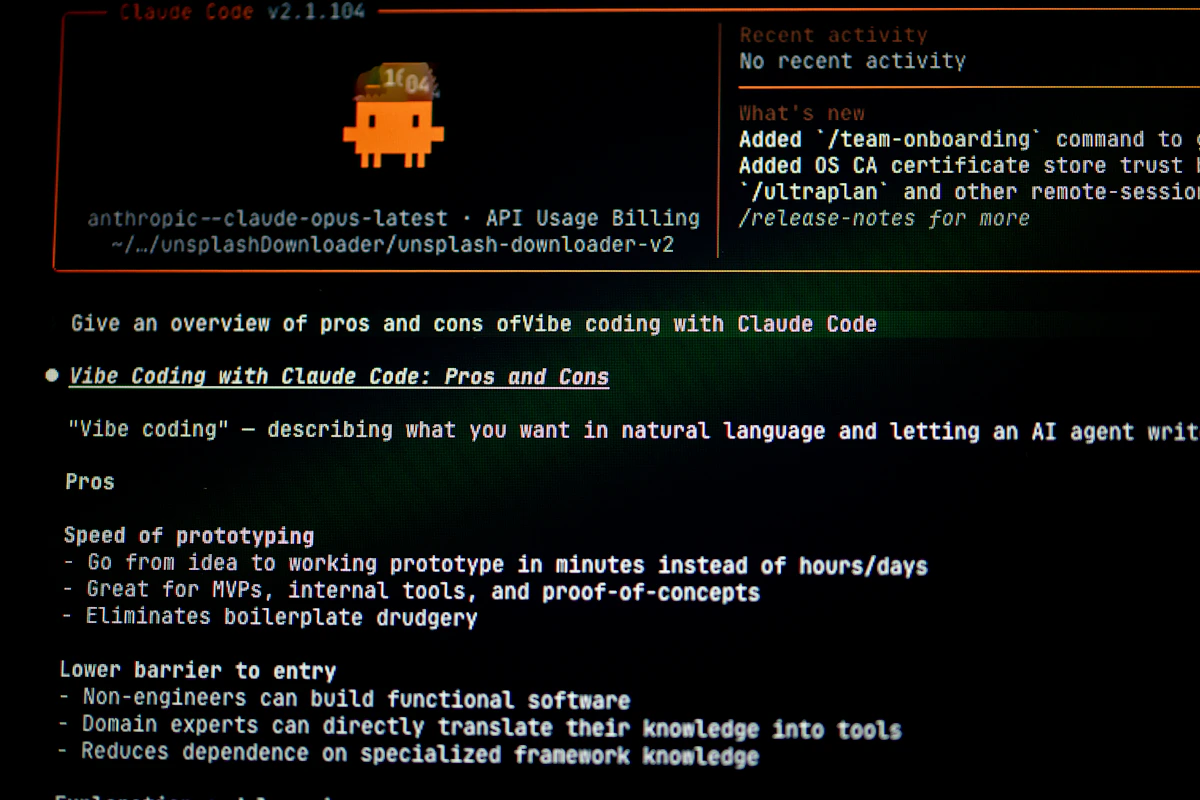
Microsoft Cancels Claude Code Licenses, Disrupting Developer Workflows

Microsoft just pulled the plug on its internal Claude Code licenses. Not a quiet sunset. A hard stop, after costs spiraled past acceptable thresholds.
For developers who’d woven Anthropic’s agentic coding tool into their daily workflow, this wasn’t just an inconvenience. It’s a signal about where enterprise AI procurement is heading — and why “we’ll figure out costs later” isn’t a strategy anymore.
The story broke in mid-May 2026 and spread fast across developer communities on Reddit and Hacker News. The core issue: token consumption from Claude Code’s agentic loops ran dramatically over budget. Microsoft made the call to cancel. Thousands of internal developers lost access overnight.
That’s the surface story. The deeper one is about multi-model governance, AI budget controls, and what happens when enterprises deploy powerful agentic tools without the right cost guardrails.
In brief: Microsoft terminated its internal Claude Code licenses in May 2026 after token costs exceeded budget projections, creating immediate developer workflow disruption across internal teams. The decision reflects a broader enterprise reckoning with agentic AI economics.
- Agentic coding tools consume tokens at rates that bear little resemblance to traditional API usage estimates.
- Microsoft’s cancellation wasn’t a product quality judgment — it was a procurement and governance failure that caught up with the deployment.
- Enterprises that don’t build multi-model cost controls before broad rollouts are setting themselves up for the same outcome.
Background: How Microsoft Got Here
Claude Code launched in general availability in early 2025. It’s not a simple autocomplete tool. It operates as an autonomous agent — reading codebases, writing files, running terminal commands, iterating on tasks across multiple steps. That architecture is powerful. It’s also token-hungry by design.
Microsoft, like many large enterprises, moved quickly to deploy it internally. The pitch was compelling: developers could offload large refactoring tasks, boilerplate generation, and code review prep to an AI agent that actually did the work rather than just suggesting completions.
The problem emerged in the economics. Standard API usage for chat-style interactions might cost a few cents per session. Agentic loops — where Claude Code autonomously reads dozens of files, writes code, runs tests, reads error outputs, and iterates — can consume thousands of tokens in a single task. Multiply that across hundreds or thousands of internal developers running multiple sessions daily, and the cost curve gets steep fast.
According to reporting from AI Weekly, Microsoft canceled the licenses after a budget overrun. The specifics weren’t disclosed publicly, but the pattern matches what other enterprises have described: initial token cost estimates based on non-agentic usage that don’t translate to agentic workloads.
EPC Group’s analysis of the cancellation noted this as a multi-model governance lesson — the kind of situation where procurement moved faster than cost modeling. The Reddit thread on r/theprimeagen surfaced immediate developer reactions, mostly frustration, but also acknowledgment that this was a predictable outcome given how Claude Code operates.
The timing matters. May 2026 is roughly 14 months into widespread enterprise agentic AI adoption. Enough time for early deployments to generate real cost data. This cancellation is likely the first of several that will reshape how enterprises think about agentic tool licensing.
The Agentic Cost Problem Nobody Modeled Correctly
Traditional developer tools have predictable cost structures. GitHub Copilot, for instance, runs on a per-seat subscription — $19/month per developer, fixed. Enterprises can budget that without breaking a sweat.
Claude Code doesn’t work that way. Token consumption scales with task complexity, codebase size, and how autonomously the agent is allowed to operate. A developer asking it to refactor a microservice might trigger 50,000–200,000 tokens per session, depending on context window loading and iteration cycles.
Microsoft’s internal developer count — tens of thousands of engineers globally — means even moderate per-developer usage compounds fast. If 5,000 developers average 3 agentic sessions per day at 100,000 tokens each, that’s 1.5 billion tokens daily. At Anthropic’s enterprise pricing (industry estimates from Andreessen Horowitz’s 2025 AI infrastructure report place Sonnet-class tokens at roughly $3–15 per million tokens for enterprise tiers), the daily cost sits between $4,500 and $22,500. Monthly: $135,000 to $675,000. Annually: over $8 million at the high end, for one tool.
That’s not unmanageable for Microsoft’s scale. But if actual usage ran 3–5x initial projections — a common outcome with agentic tools, per Gartner’s Q1 2026 AI cost tracking report — the bill changes the conversation entirely.
Developer Workflow Disruption: The Real Blast Radius
The workflow disruption wasn’t just about losing a tool. It’s about dependency depth.
Developers who’d used Claude Code for 6–12 months had restructured their workflows around it. Tasks that previously took hours — large-scale refactors, generating test suites for legacy code, writing documentation from code comments — became 20-minute jobs. When access disappeared, those hours came back. Productivity didn’t just plateau; it felt like regression.
This is the hidden cost that doesn’t show up in procurement spreadsheets. Workflow integration creates dependency. Canceling a subscription isn’t like uninstalling an app. It removes a capability that developers had built mental models and time estimates around.
The Reddit thread captured this clearly: developers weren’t just annoyed, they were recalibrating sprint estimates. That’s a real productivity cost, and one Microsoft’s finance team almost certainly didn’t account for when pulling the trigger.
This approach can fail in other ways too. Enterprises that do model costs correctly sometimes still underestimate the organizational cost of reversal — the retraining, the morale hit, the sprint disruption. Cancellation impact assessments need to exist before broad rollouts, not after.
The Multi-Model Strategy Microsoft Should Have Had
EPC Group’s analysis framed this as a multi-model governance failure. That framing is correct.
A smarter architecture would’ve looked like this: use Claude Code (or any high-capability agentic model) for tasks that genuinely need its depth, while routing simpler tasks — code completion, docstring generation, quick Q&A — to cheaper models like GitHub Copilot or a self-hosted open-source alternative.
Microsoft already owns GitHub Copilot. The gap was governance: no policy enforcing which tool to use for which task class, no token budgets at the team or project level, and no real-time cost visibility that would’ve triggered a conversation before a cancellation.
This isn’t always the answer, either. Multi-model governance adds complexity. Smaller engineering teams without dedicated platform engineering support may find that overhead cost outweighs the savings. But at Microsoft’s scale, the calculus is different. The architecture existed. The governance layer didn’t.
Comparison: Agentic AI Tools for Enterprise Developer Workflows
| Criteria | Claude Code (Anthropic) | GitHub Copilot Enterprise | Cursor Pro (Anysphere) |
|---|---|---|---|
| Pricing Model | Token-based (usage) | Per-seat ($39/mo) | Per-seat ($40/mo) |
| Cost Predictability | Low — scales with task complexity | High — fixed monthly | Medium — model usage varies |
| Agentic Capability | High — autonomous multi-step tasks | Low-Medium — primarily inline | Medium — agent mode in beta |
| Codebase Context | Full repo indexing | Partial (workspace) | Full repo indexing |
| Enterprise Budget Controls | Limited (as of May 2026) | Strong (Copilot dashboard) | Moderate |
| Best For | Complex autonomous tasks | Daily inline completion | Mid-complexity tasks + chat |
The table shows the core tension: the most capable agentic tool has the least predictable cost structure. GitHub Copilot Enterprise, which Microsoft controls directly, offers fixed pricing but weaker autonomous task execution. Cursor sits in the middle — better agentic capabilities than Copilot, more predictable than Claude Code.
For enterprises, this isn’t a quality comparison. It’s a risk management one. Claude Code’s capabilities may be superior for complex tasks, but the absence of hard spending caps makes it a difficult enterprise product to deploy at scale without architectural guardrails that most companies haven’t built yet.
Practical Implications: Three Scenarios Worth Thinking Through
Scenario 1: You’re an engineering manager at an enterprise currently running Claude Code.
Don’t wait for your CFO to ask questions you can’t answer. Pull usage data now. Segment it by team and task type. If your developers are running full agentic sessions on tasks that Copilot could handle, you have a cost optimization opportunity that also reduces your cancellation risk. Implement token budgets at the project level before someone above you makes a blunt decision.
Scenario 2: You’re on an AI procurement team evaluating agentic tools.
Build cost modeling specific to agentic usage, not API pricing sheets. Run a 30-day pilot with 50 developers, instrument every session, and model actual token consumption before enterprise rollout. The delta between estimated and actual agentic costs is consistently 3–10x, based on multiple 2025–2026 enterprise case studies cited in the EPC Group analysis.
Scenario 3: You’re Anthropic, watching this play out.
This is a product signal, not just a PR problem. Enterprises need spending caps, usage dashboards, and tiered task routing built into the product. Claude Code’s competitive moat is capability. But capability without cost controls is a procurement liability. Adding hard budget controls at the enterprise tier could flip this narrative within a product cycle.
What to watch:
- Whether Anthropic introduces per-team token budgets in Claude Code’s enterprise dashboard (expected Q3 2026 based on product roadmap signals from their March 2026 developer summit)
- How many other large enterprises quietly follow Microsoft’s path over the next 90 days
- Whether GitHub Copilot’s roadmap accelerates agentic features specifically to capture displaced Claude Code users
Conclusion & Future Outlook
This story is a preview, not an outlier.
Key Takeaways
- Agentic tools break traditional cost models. Token-based pricing with no hard caps is incompatible with enterprise-scale deployment without active governance.
- Workflow dependency is an underpriced risk. Cancellation impact assessments need to exist before broad rollouts, not after.
- Multi-model architecture isn’t optional at scale. Routing every task through the most powerful available model is financially unsustainable.
- Anthropic needs enterprise cost controls. The cancellation reflects a product gap as much as a procurement failure.
Over the next 6–12 months, expect enterprise AI tool contracts to include much tighter usage caps and real-time spend visibility requirements. Vendors that build those controls natively will win procurement. Those that don’t will keep triggering the same outcome Microsoft just demonstrated.
The question worth sitting with: if your team lost its primary AI coding tool tomorrow with no warning, how many days of productivity loss would that cost? If you don’t know the answer, that’s the gap to close first.
References
- Microsoft Drops Claude Code After Budget Overrun | AI Weekly
- Microsoft Just Cancelled Internal Claude Code Licenses: The Multi-Model AI Lesson Every CIO Should T
- r/theprimeagen on Reddit: Microsoft canceled its internal Claude Code licenses this week after token
Photo by BoliviaInteligente on Unsplash