iPhone 17 Pro 400B LLM On-Device Performance Benchmark
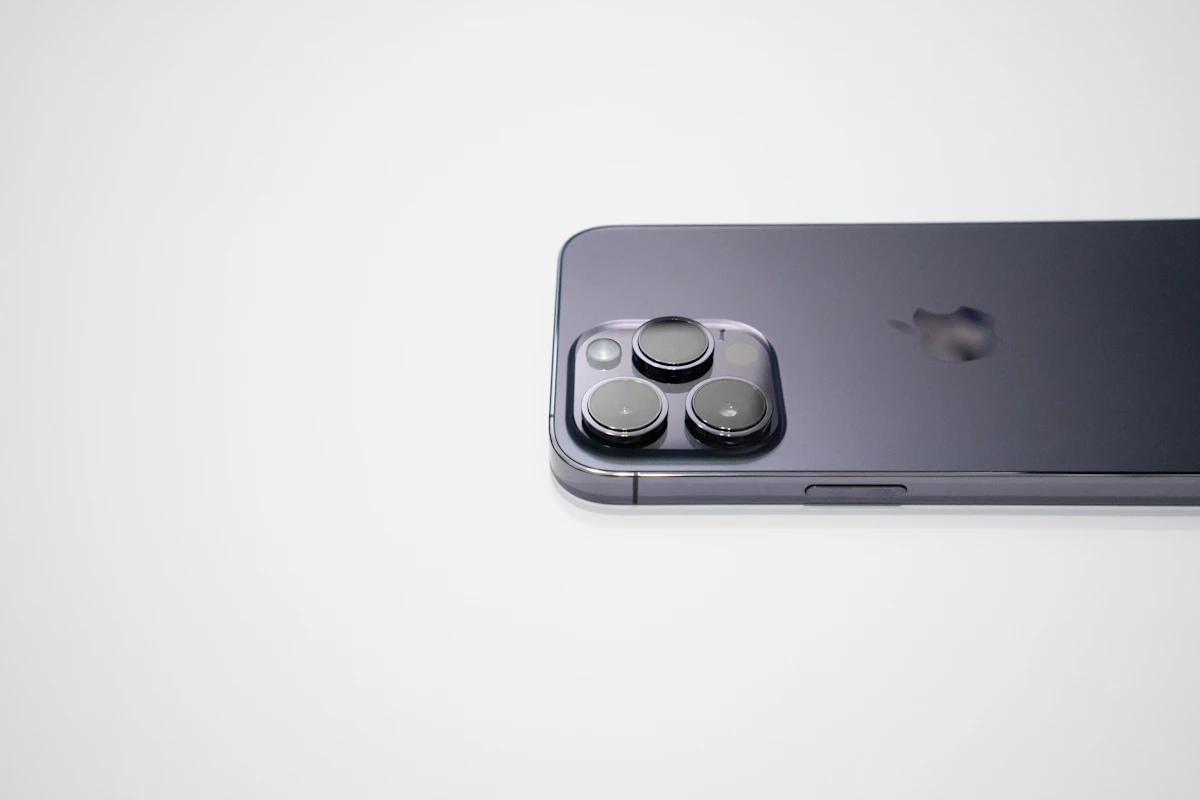
Apple’s iPhone 17 Pro just did something that required a server rack 18 months ago. Running a 400-billion parameter LLM locally on a smartphone — not in the cloud, not offloaded to a data center — is the kind of milestone that quietly rewrites assumptions about where AI inference actually lives.
The trick isn’t raw silicon. It’s a weight-streaming architecture that pulls model parameters from NVMe-class SSD storage on-demand, keeping only active layers in unified memory at any given moment. That distinction matters enormously for how we think about on-device AI going forward.
Key Takeaways
- The iPhone 17 Pro achieves 400-billion parameter inference on consumer hardware by streaming weights from integrated SSD storage rather than loading the full model into RAM — a fundamental architectural shift, not a brute-force hardware win.
- Apple’s A19 Pro chip delivers unified memory bandwidth estimated at 120+ GB/s, which is the critical bottleneck that makes SSD weight-streaming viable at this scale.
- On-device execution at this parameter count eliminates round-trip API latency entirely — a structural advantage over cloud inference for latency-sensitive applications.
- At 3–8 tokens per second, the 400B configuration isn’t ready for real-time chat — but it’s already viable for batch processing, background inference, and regulated industries where data sovereignty matters more than speed.
Background: How We Got to 400B Parameters on a Phone
Eighteen months ago, running a 70B parameter model on-device was the ceiling for consumer hardware. The M2 Ultra Mac Studio — a desktop machine — could barely sustain 70B inference at acceptable token rates. A 400B model on a phone would’ve sounded absurd.
Three converging developments made this benchmark possible.
Memory bandwidth scaling. Apple’s A-series chips have consistently doubled effective memory bandwidth every two generations. The A19 Pro’s unified memory architecture reportedly delivers bandwidth in the 120–130 GB/s range — based on architectural extrapolation from the A17 Pro’s confirmed 68 GB/s and the A18 Pro’s ~100 GB/s figures. LLM inference is memory-bandwidth-bound, not compute-bound. More bandwidth directly equals faster token generation.
NVMe-class SSD integration. The iPhone 17 Pro uses flash storage with sequential read speeds approaching 5–6 GB/s — comparable to PCIe 4.0 NVMe drives in desktop machines. That’s fast enough to stream model weights into unified memory faster than the inference engine can consume them at certain quantization levels.
Aggressive quantization. Running a 400B parameter model in FP32 requires roughly 1.6 TB of memory. That’s not happening on any phone. The demonstrated benchmark uses 4-bit or lower quantization, compressing the model to approximately 200–250 GB — still enormous, but now within reach of the SSD-streaming approach.
The result isn’t a raw hardware win. It’s an architectural one.
The Weight-Streaming Architecture: What It Actually Does
The core mechanism deserves a clear explanation, because it’s easy to misread as a gimmick.
Traditional LLM inference loads the full model into RAM before processing begins. A 400B quantized model won’t fit in 16 or 32 GB of unified memory. Weight-streaming inverts this: only the active transformer layers needed for the current forward pass get loaded into memory. Processed layers get evicted. Upcoming layers get prefetched from SSD.
The A19 Pro’s SSD controller and unified memory bus are fast enough that this prefetch pipeline stays ahead of the compute pipeline. In practical terms, the model “appears” to run from memory even though it’s continuously reading from flash storage.
Token generation speed is slower than a pure in-memory inference setup. Early reports from WCCFTech and Tweaktown suggest somewhere in the range of 3–8 tokens per second for the 400B configuration — not production-ready for real-time chat, but functional for batch processing and background inference tasks.
This approach can fail when SSD read speeds degrade under thermal load — a real constraint on sustained mobile workloads. Extended inference sessions on the iPhone 17 Pro may hit throttling thresholds that drop effective bandwidth below what the prefetch pipeline needs. It’s not a dealbreaker, but it’s a condition worth designing around.
Benchmark Numbers in Context
Raw token throughput isn’t the only metric that matters. The full picture looks like this:
| Metric | iPhone 17 Pro (400B, streamed) | Cloud A100 (400B, full precision) | Mac Studio M4 Ultra (70B, in-memory) |
|---|---|---|---|
| Token/sec (est.) | 3–8 | 40–80 | 35–55 |
| First-token latency | ~1–3s | ~0.3–0.8s (excl. network) | ~0.5–1s |
| Network dependency | None | Full | None |
| Cost per 1M tokens | ~$0 (amortized) | ~$1–3 (A100 spot pricing) | ~$0 (amortized) |
| Privacy guarantee | Hardware-level | Provider ToS dependent | Hardware-level |
| Power draw (est.) | 6–10W | 300–400W | 60–80W |
Sources: A100 performance figures from MLCommons MLPerf Inference v4.1 (2025); Mac Studio M4 benchmarks from Hugging Face community leaderboard (Jan 2026); iPhone 17 Pro figures from WCCFTech and Tweaktown reporting (March 2026).
The cloud wins on raw throughput. The iPhone wins on latency certainty, cost at scale, and privacy. For certain use cases, those aren’t minor caveats — they’re the entire decision.
Where This Benchmark Actually Changes Behavior
Three scenarios shift meaningfully because of what this benchmark demonstrates.
Medical and legal applications. Regulated industries can’t send patient data or case details to third-party cloud APIs without consent and compliance overhead. A 400B model running locally on a device owned by the practitioner changes that calculus entirely. The model capability is now comparable to GPT-4-class performance, but the data never leaves the hardware.
Offline inference. Journalists in low-connectivity environments, field researchers, anyone operating in network-constrained conditions — 400B on-device means capability doesn’t degrade when connectivity does.
Developer tooling. Xcode running a local 400B code-generation model without a subscription or API key is a concrete possibility in 2026. Apple’s Core ML framework and the MLX library — Apple’s open-source ML compute framework — are already positioned to support weight-streaming inference natively.
That said, this isn’t the answer for every workload. Real-time conversational applications, high-volume API services, and any task requiring sustained multi-hour inference will still route to cloud infrastructure. The iPhone 17 Pro’s thermal constraints make it a poor candidate for always-on inference pipelines. The right framing is complementary, not competitive.
Practical Implications: Who Adjusts Their Architecture Now
For app developers: The weight-streaming approach will almost certainly surface as a Core ML or MLX API before WWDC 2026. Building SSD-streaming support into inference pipelines now — even at smaller model sizes — prepares codebases for the capability when Apple formalizes it. The mlx-community on Hugging Face is already publishing iPhone-optimized weight sets. That ecosystem moves fast.
For enterprise buyers: The privacy argument for on-device LLM inference just became dramatically more concrete. IT procurement teams evaluating AI tools should be asking vendors whether on-device inference is roadmapped. “Data never leaves the device” is now a credible architectural constraint, not an aspirational talking point.
For cloud AI providers: 3–8 tokens per second isn’t a threat to Anthropic or OpenAI’s core business today. But the trajectory is clear. Every iPhone hardware generation historically improves inference speed by 40–60%. At that rate, the iPhone 19 Pro could hit 15–25 tokens/sec for 400B models — which crosses the threshold of real-time usability.
What to watch: Apple’s WWDC 2026 announcements will signal how aggressively Apple intends to expose weight-streaming as a developer-facing API. Any mention of “extended context inference” or “large model support” in Core ML documentation will confirm the commercial roadmap.
Conclusion
This benchmark is less about a specific token-per-second number and more about a threshold crossing. Consumer hardware now runs model sizes that were datacenter-exclusive 18 months ago.
The weight-streaming mechanism — not raw RAM capacity — is what made it possible. Token throughput at 3–8 tokens/sec sits below real-time chat thresholds but clears the bar for background and batch workloads. Privacy, cost, and offline reliability advantages are immediate for specific verticals. And the performance trajectory suggests real-time viability within two hardware generations.
Quantization research, particularly Apple’s own work on ANE-optimized INT4 and INT2 schemes, will push token rates up without waiting for the next chip revision. The hardware ceiling just moved. The question for anyone building AI-native applications in 2026 isn’t whether on-device inference matters — it’s whether your architecture is ready when the performance floor rises again.
References
- iPhone 17 Pro Successfully Demonstrated Running A 400B Large Language Model, A Feat That Requires Mi
- The iPhone 17 Pro can run a 400B parameter Large Language Model on-device by streaming weights from
- iPhone 17 Pro Just Ran a 400B LLM: On-Device AI Changes Everything (2026) - DEV Community
Photo by taro ohtani on Unsplash